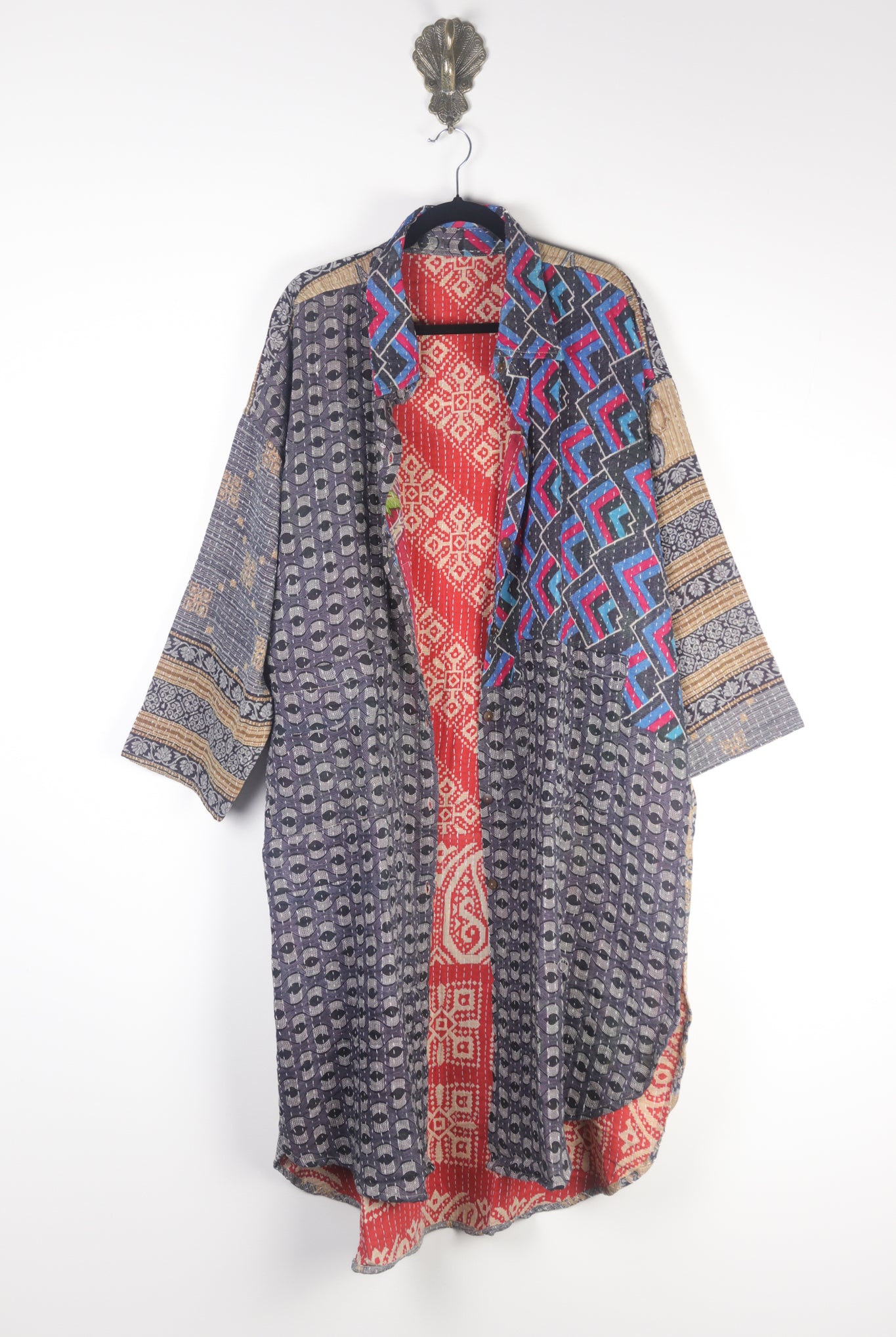
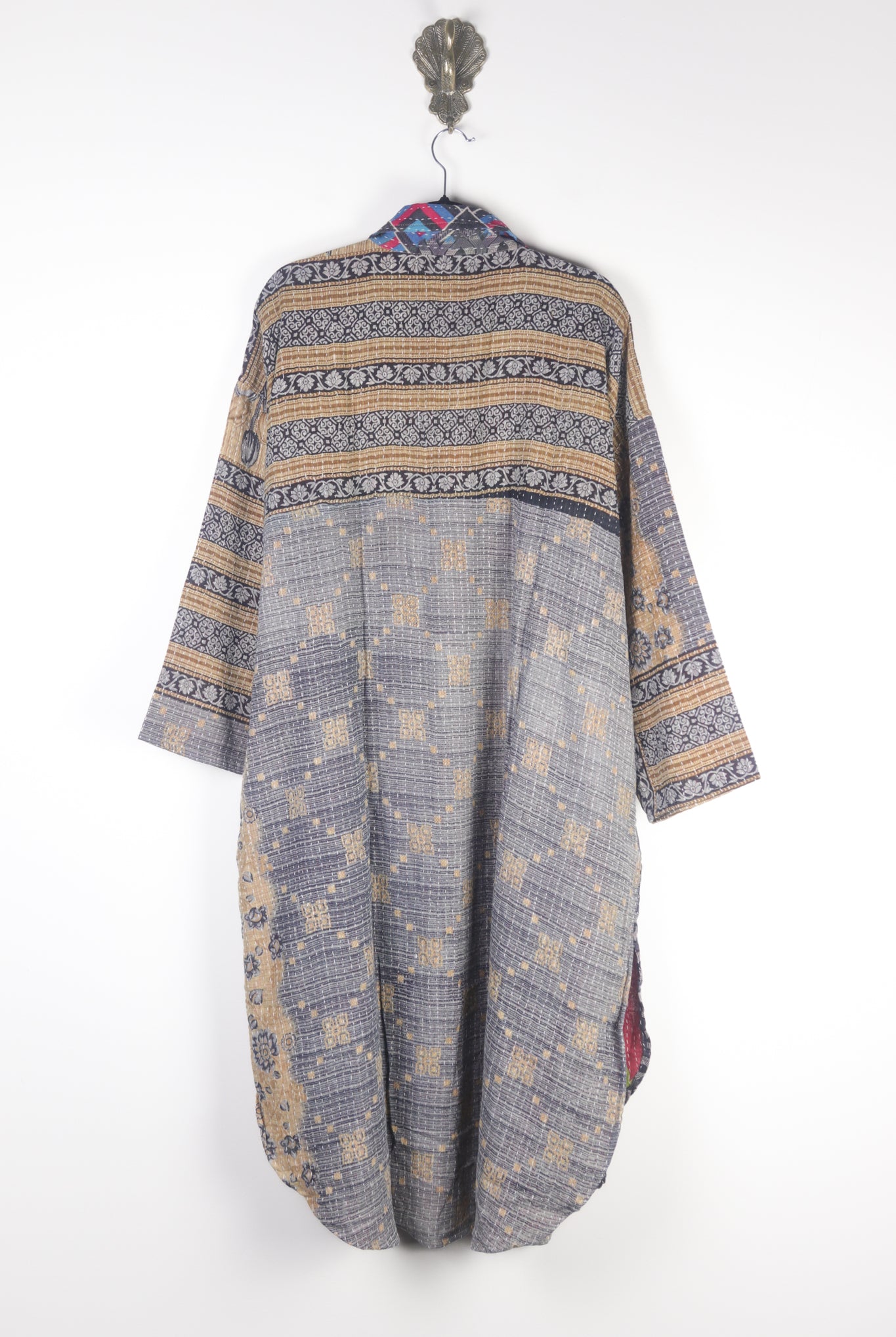
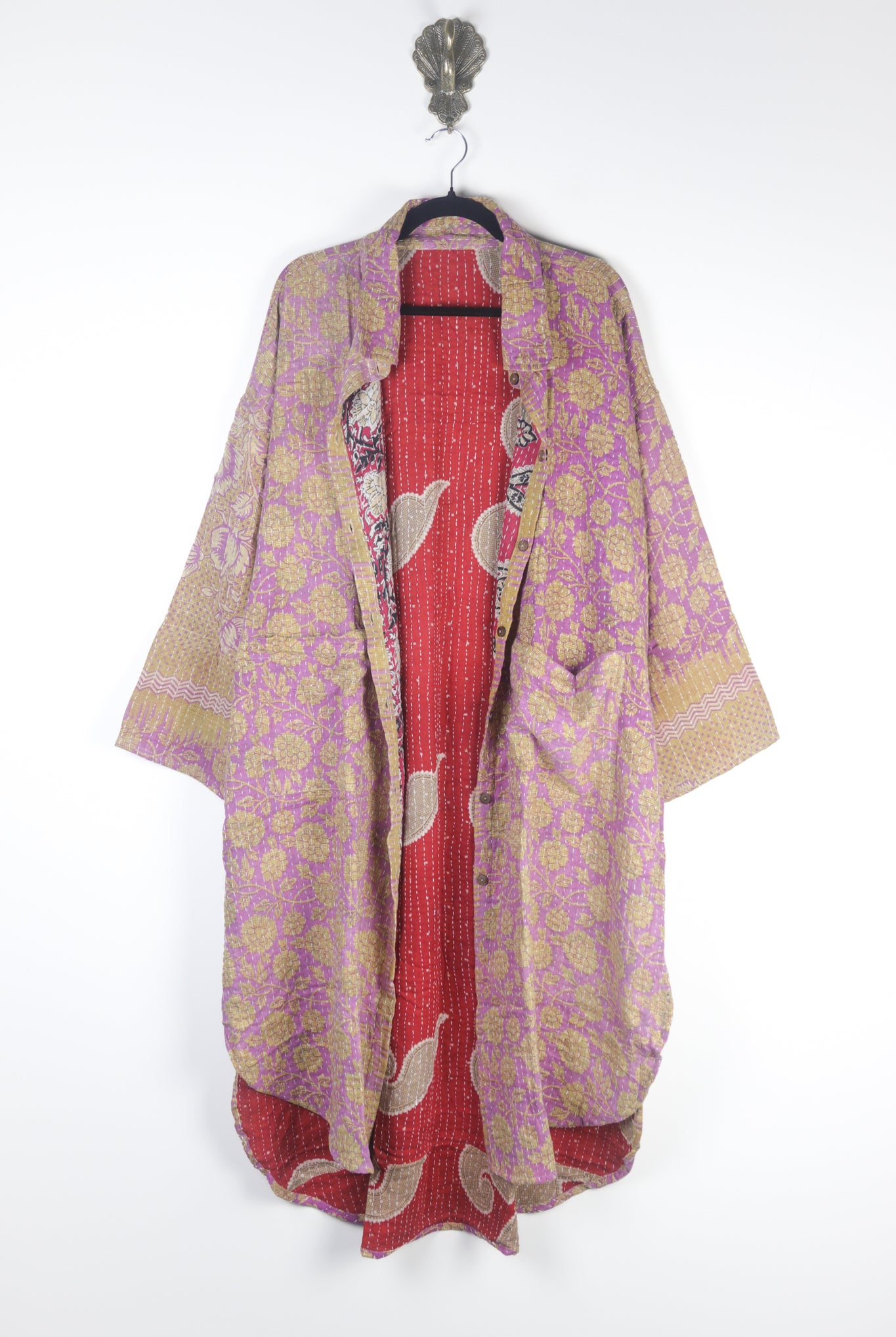
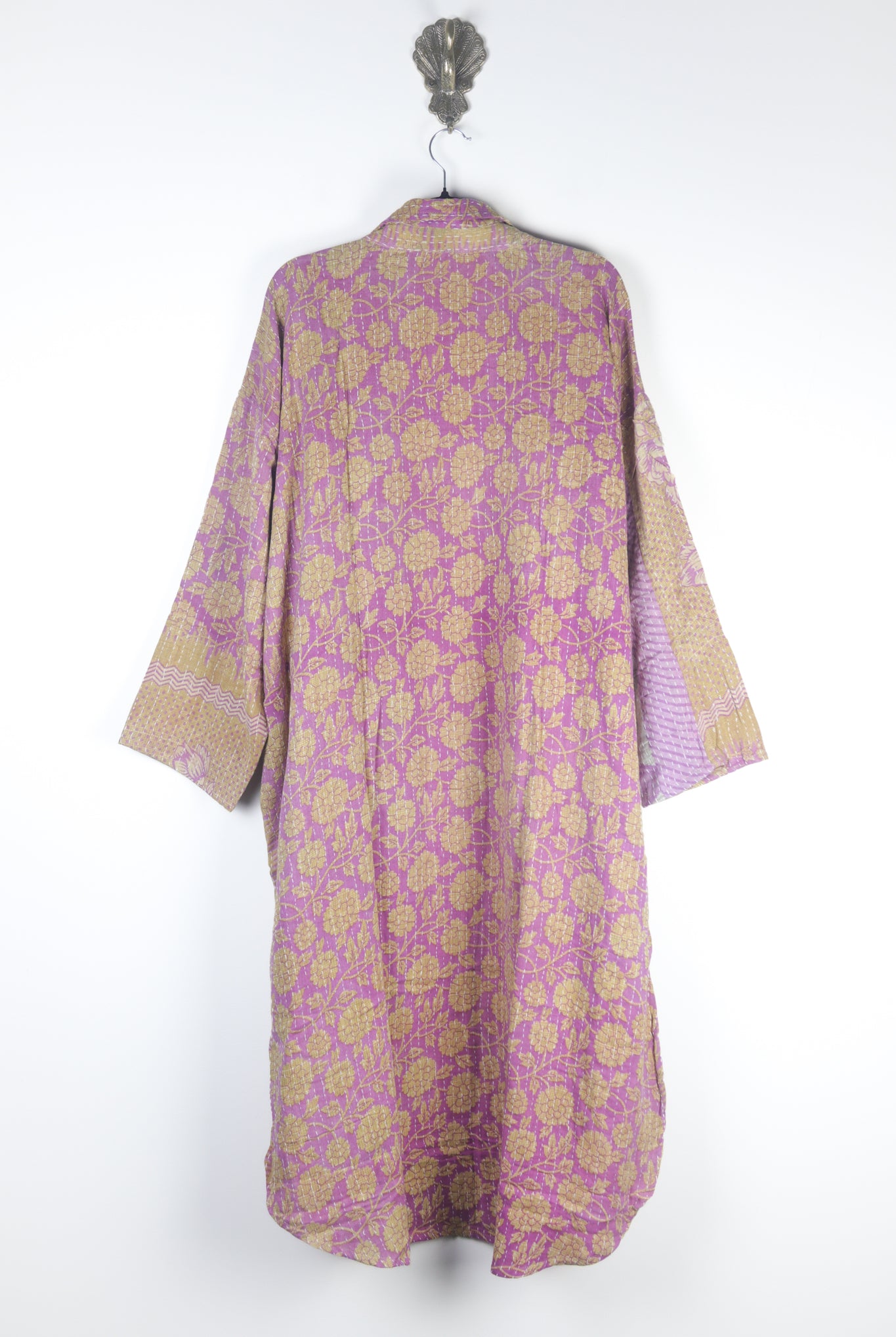
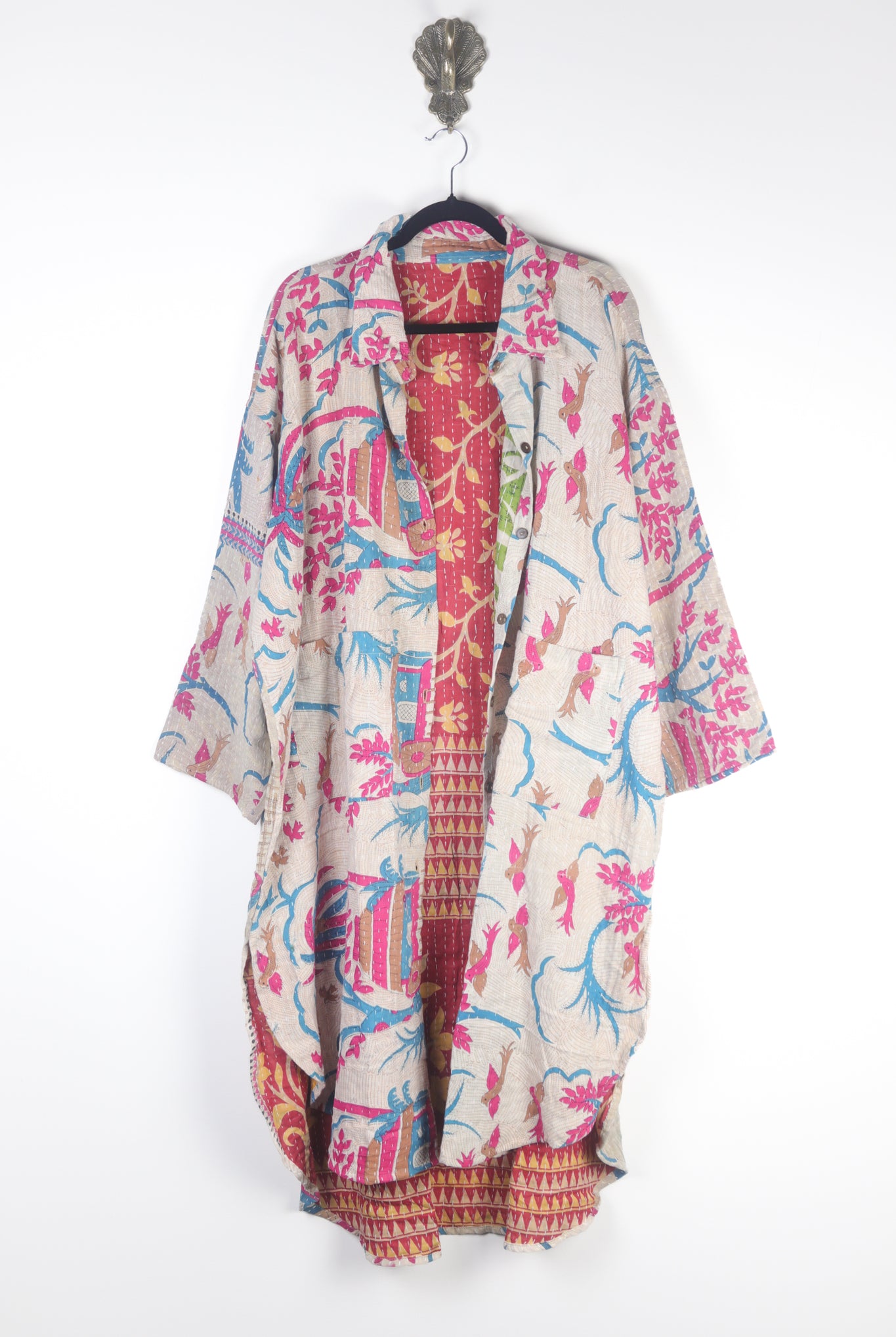
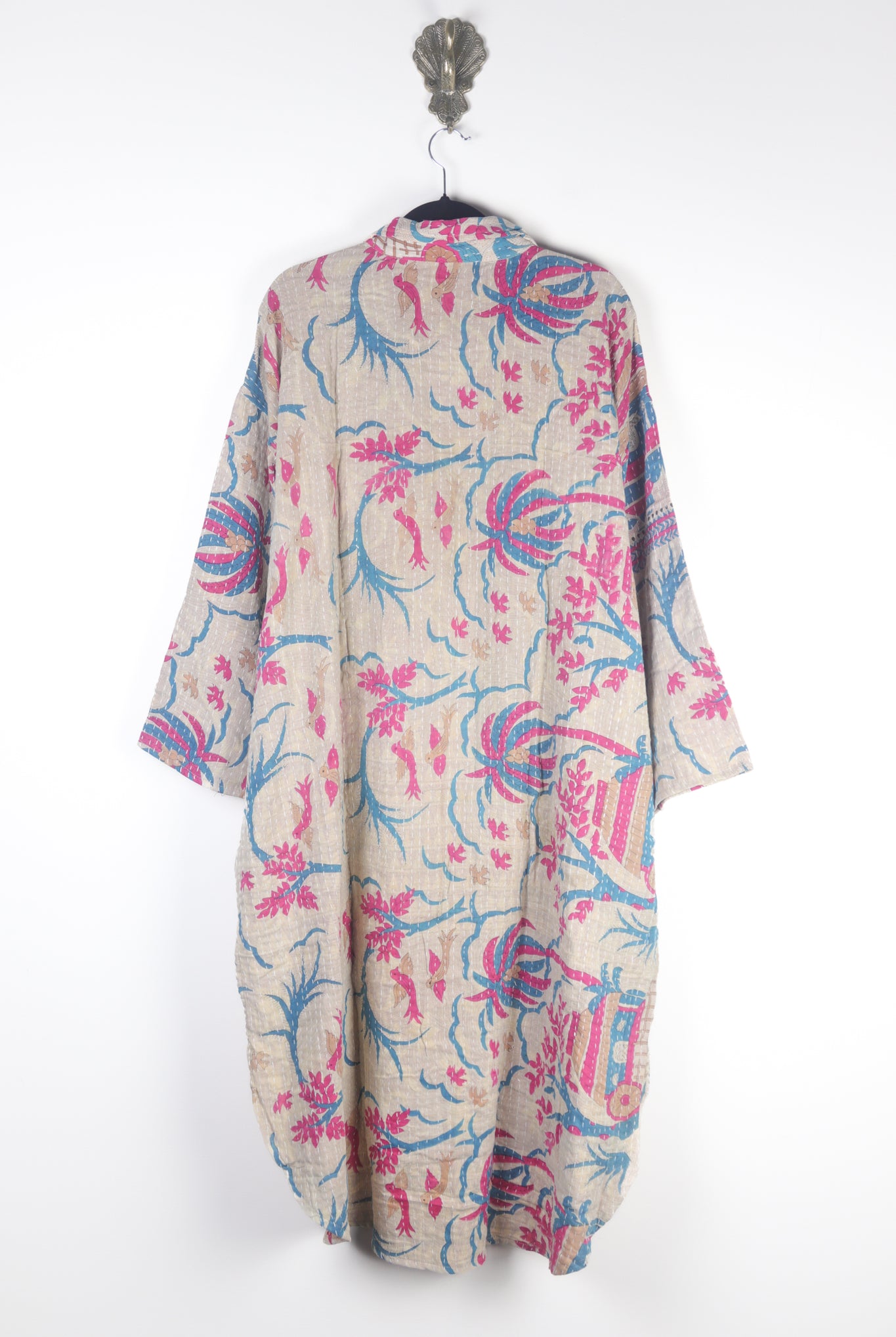
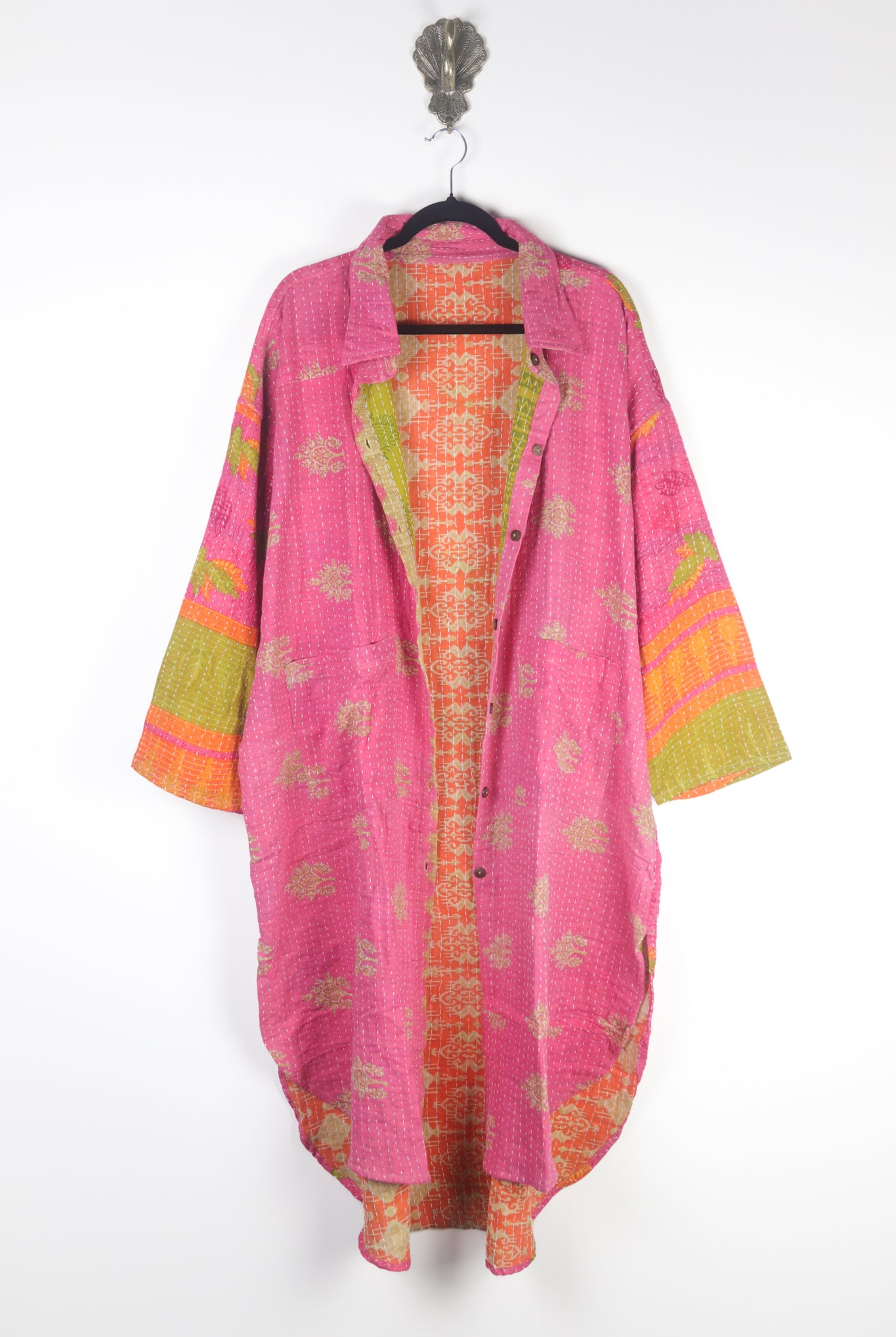
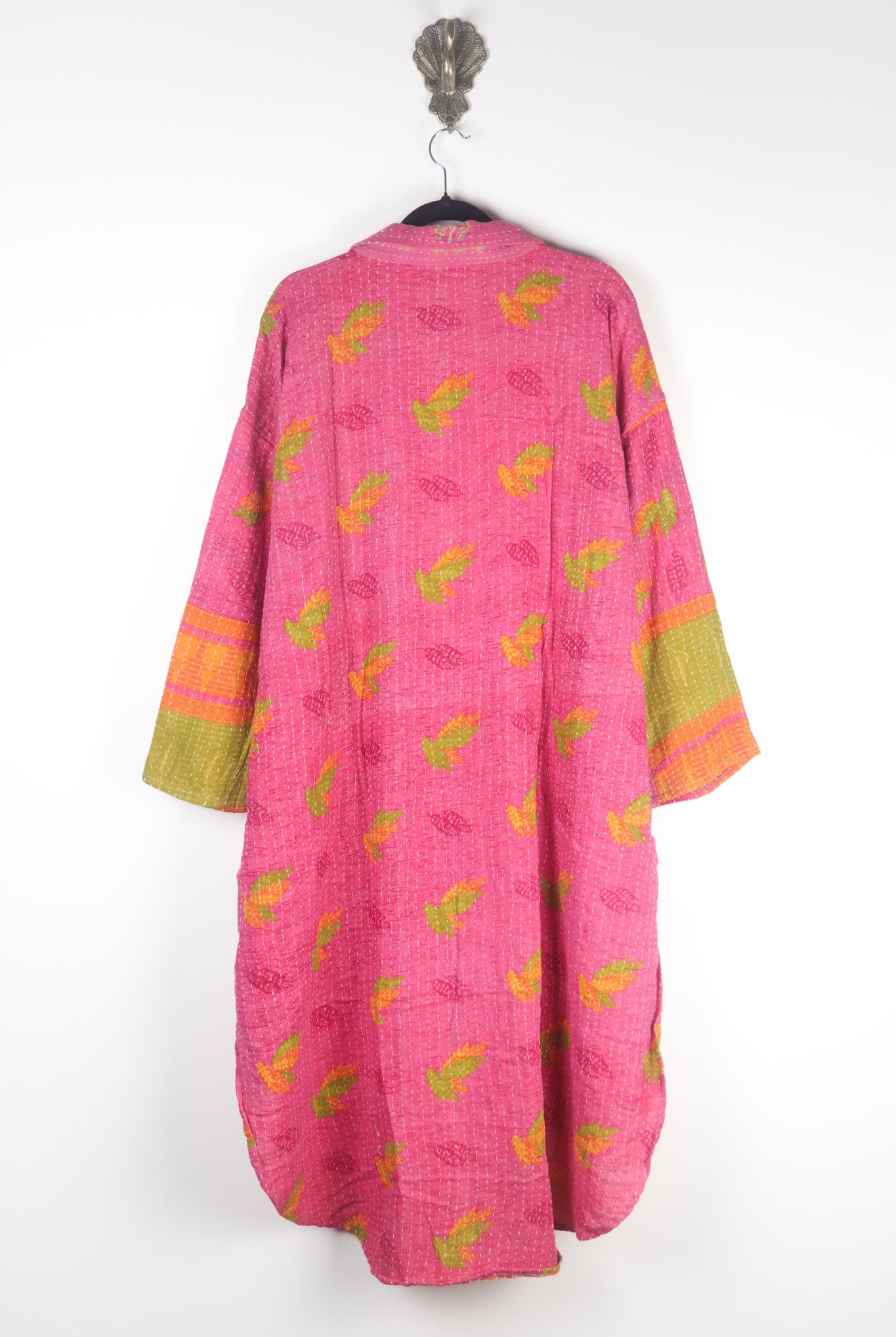
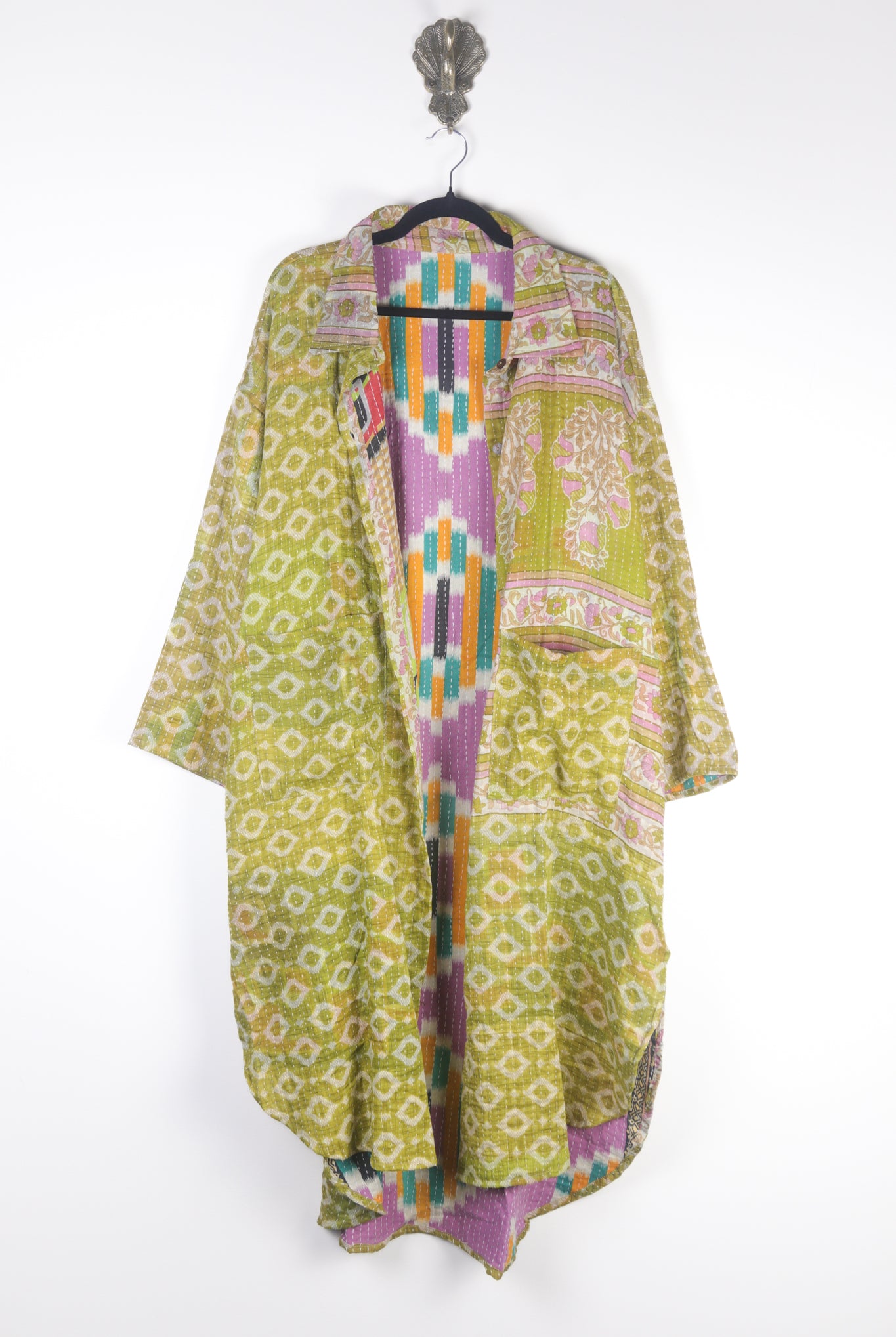
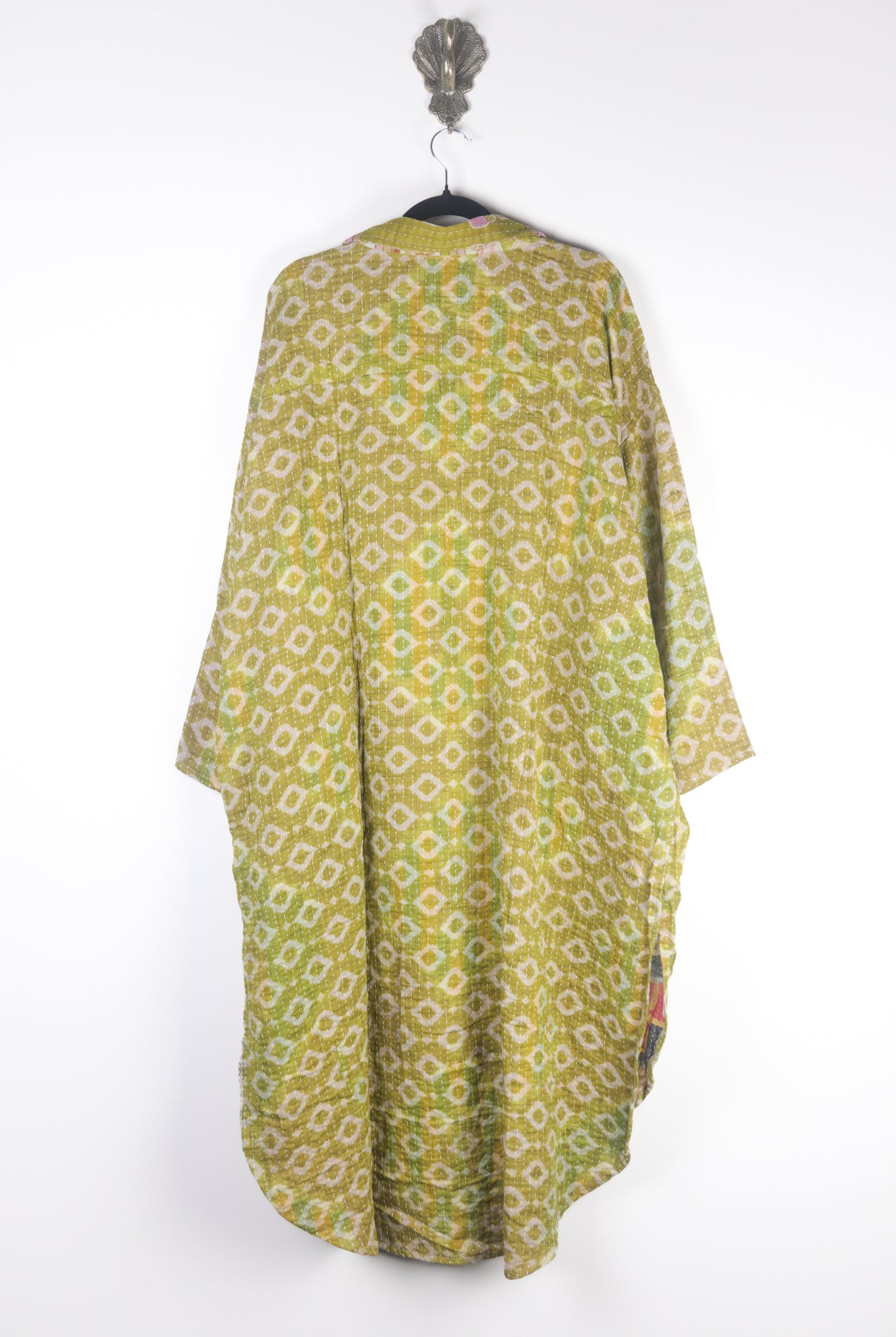
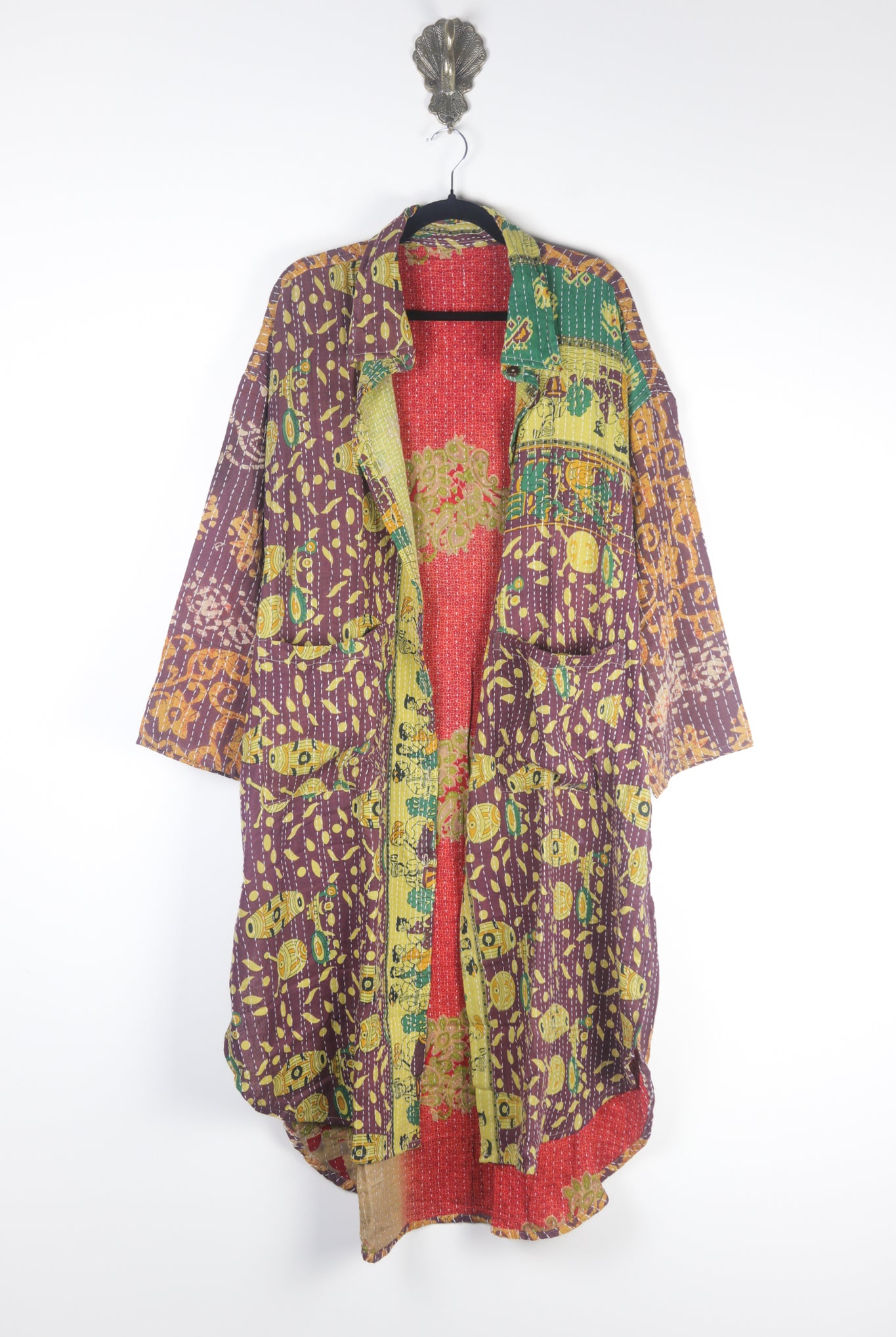
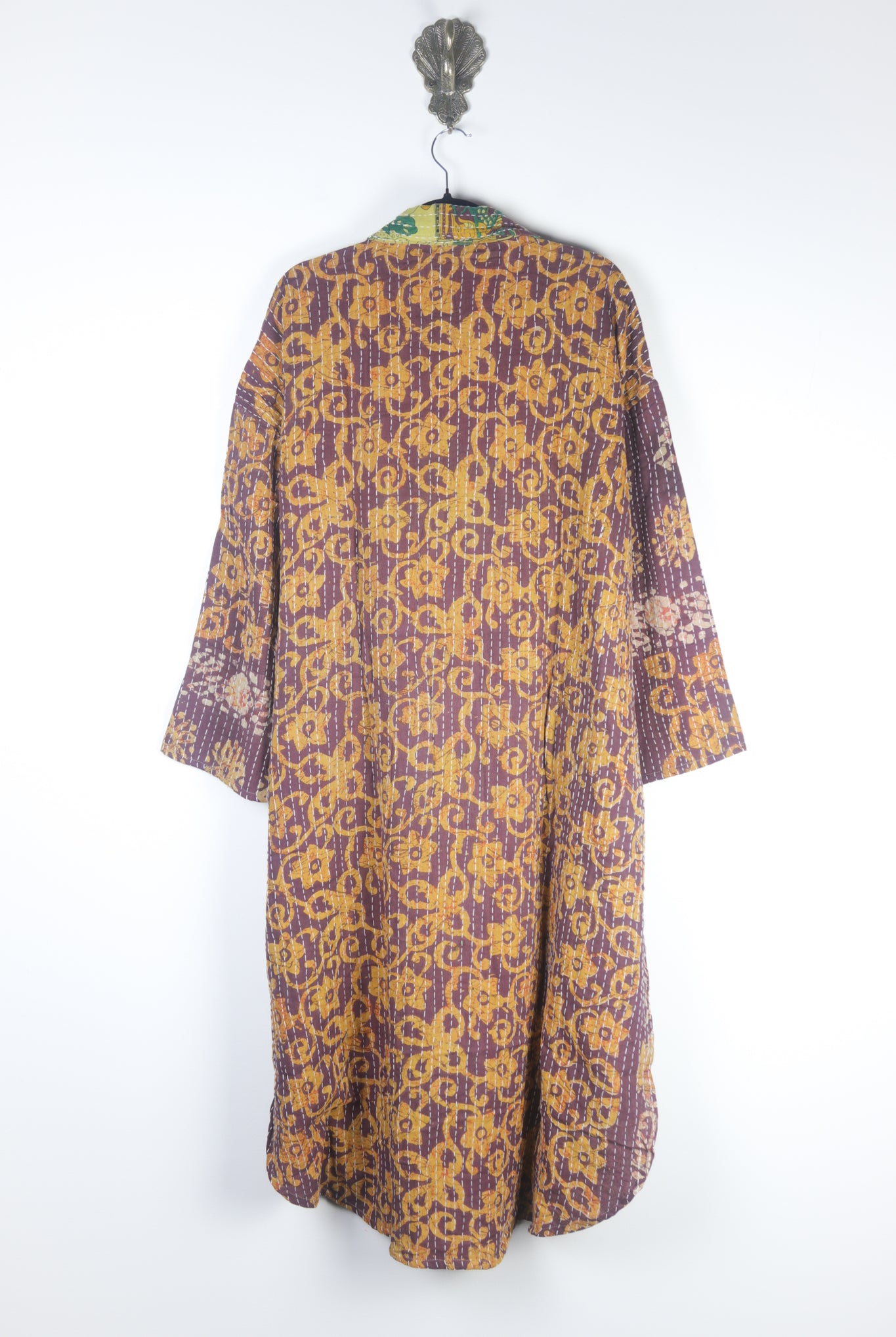
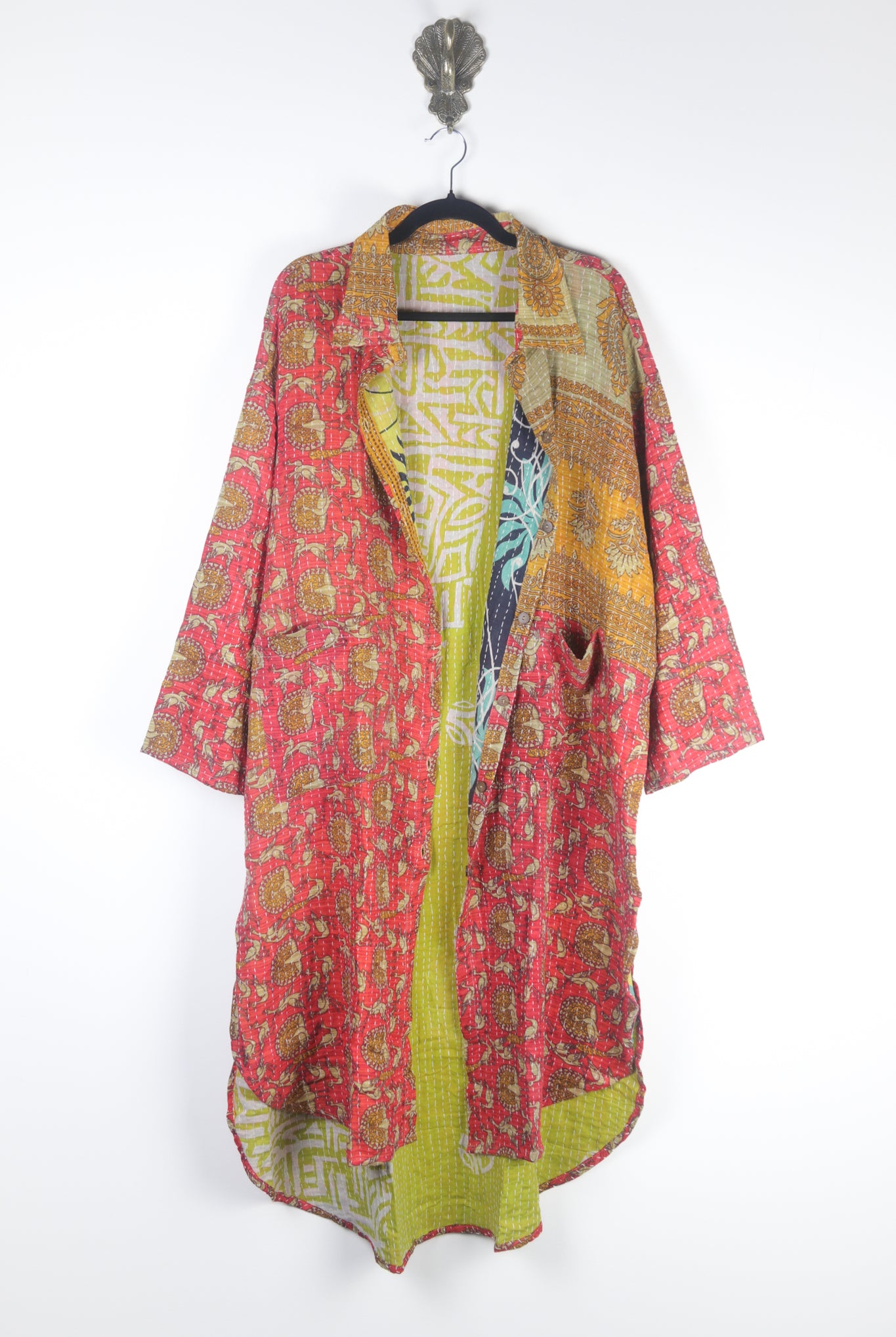
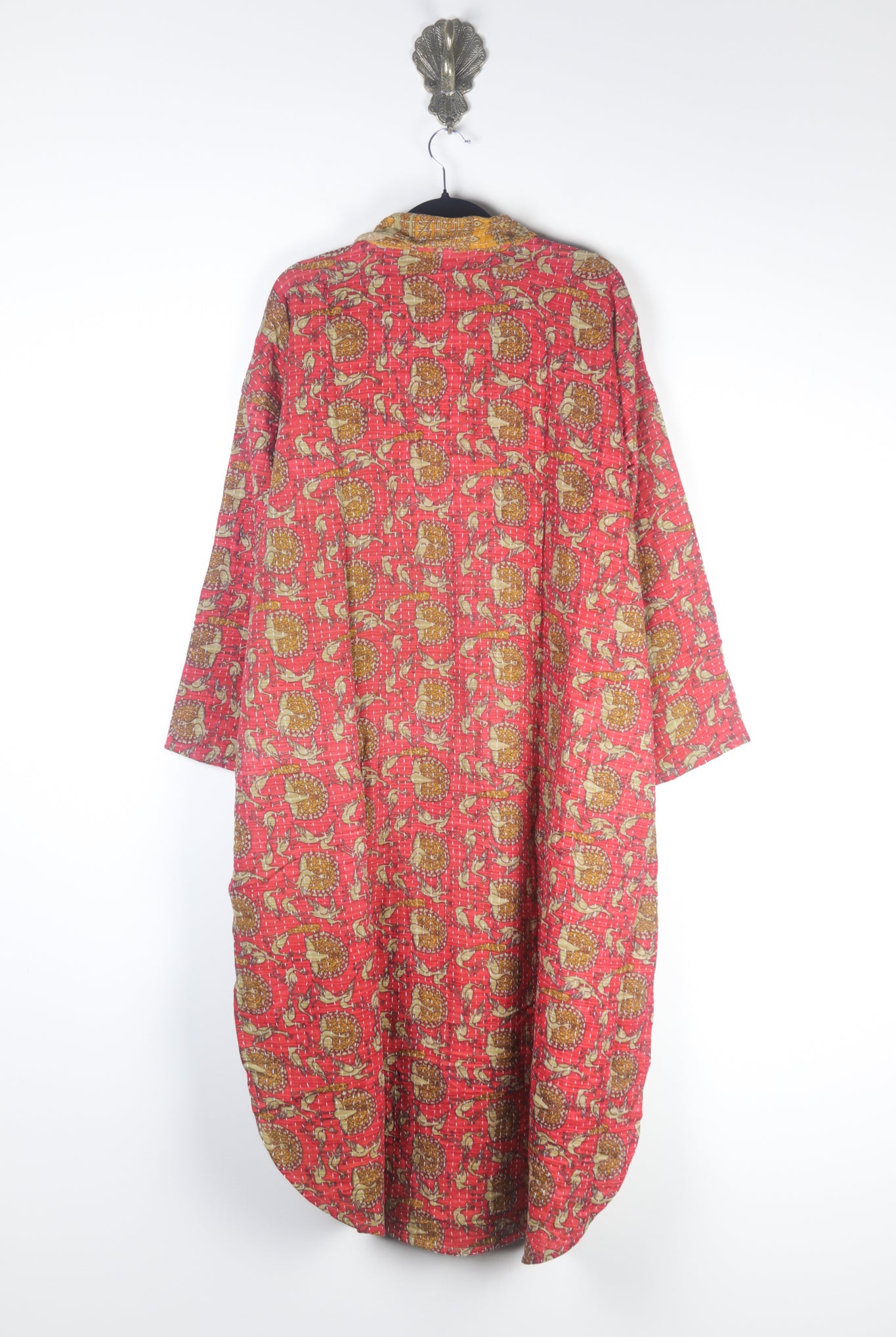
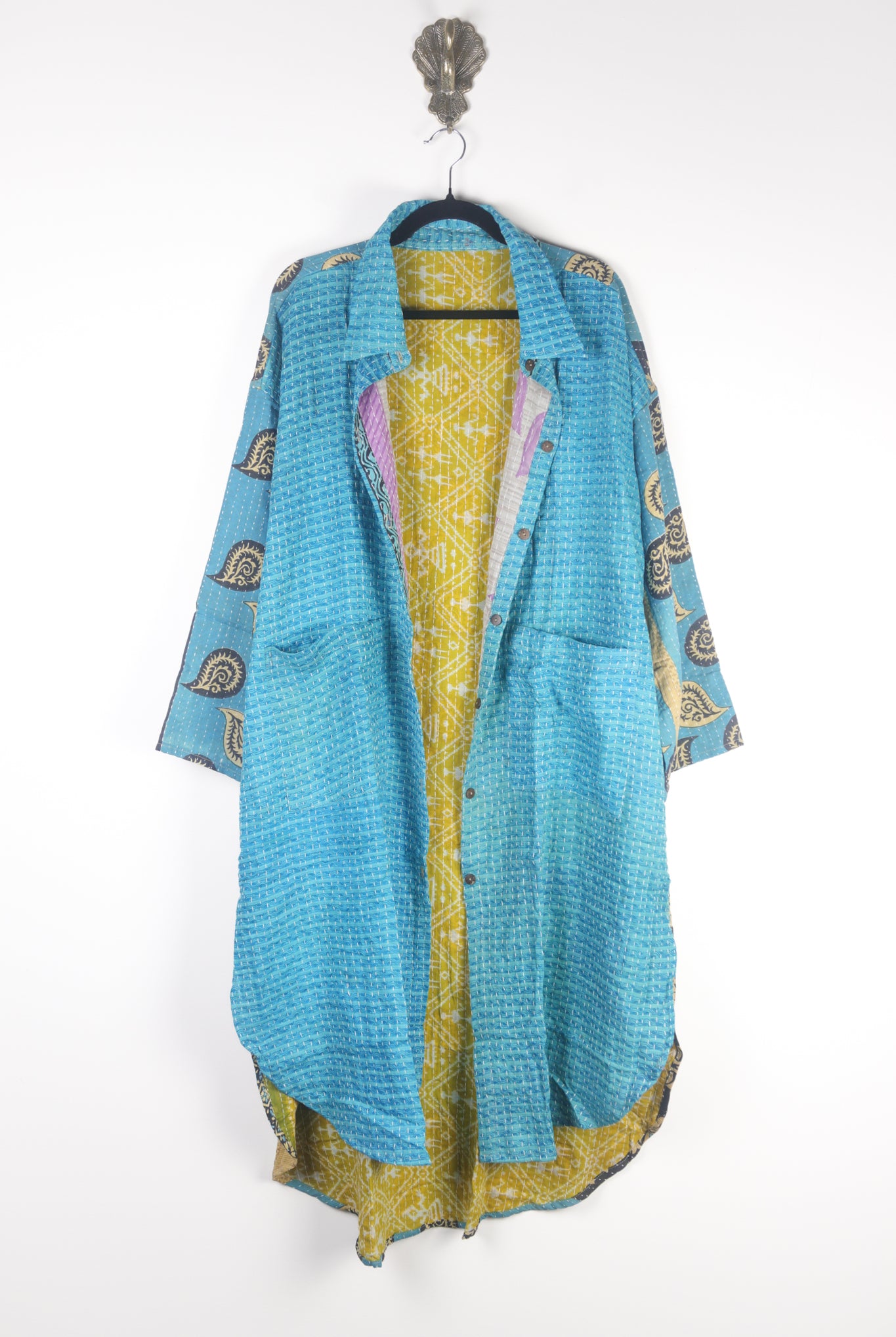
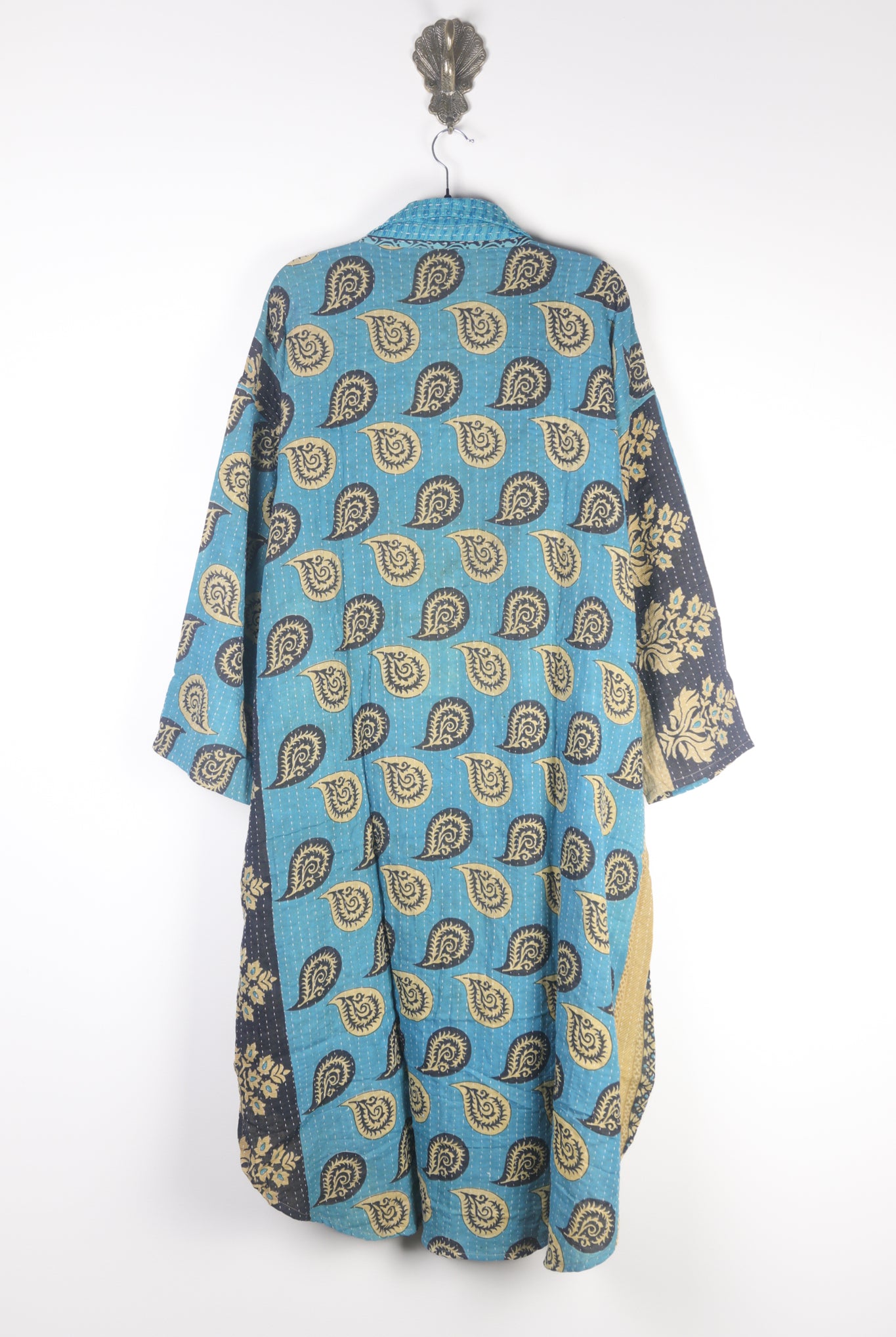
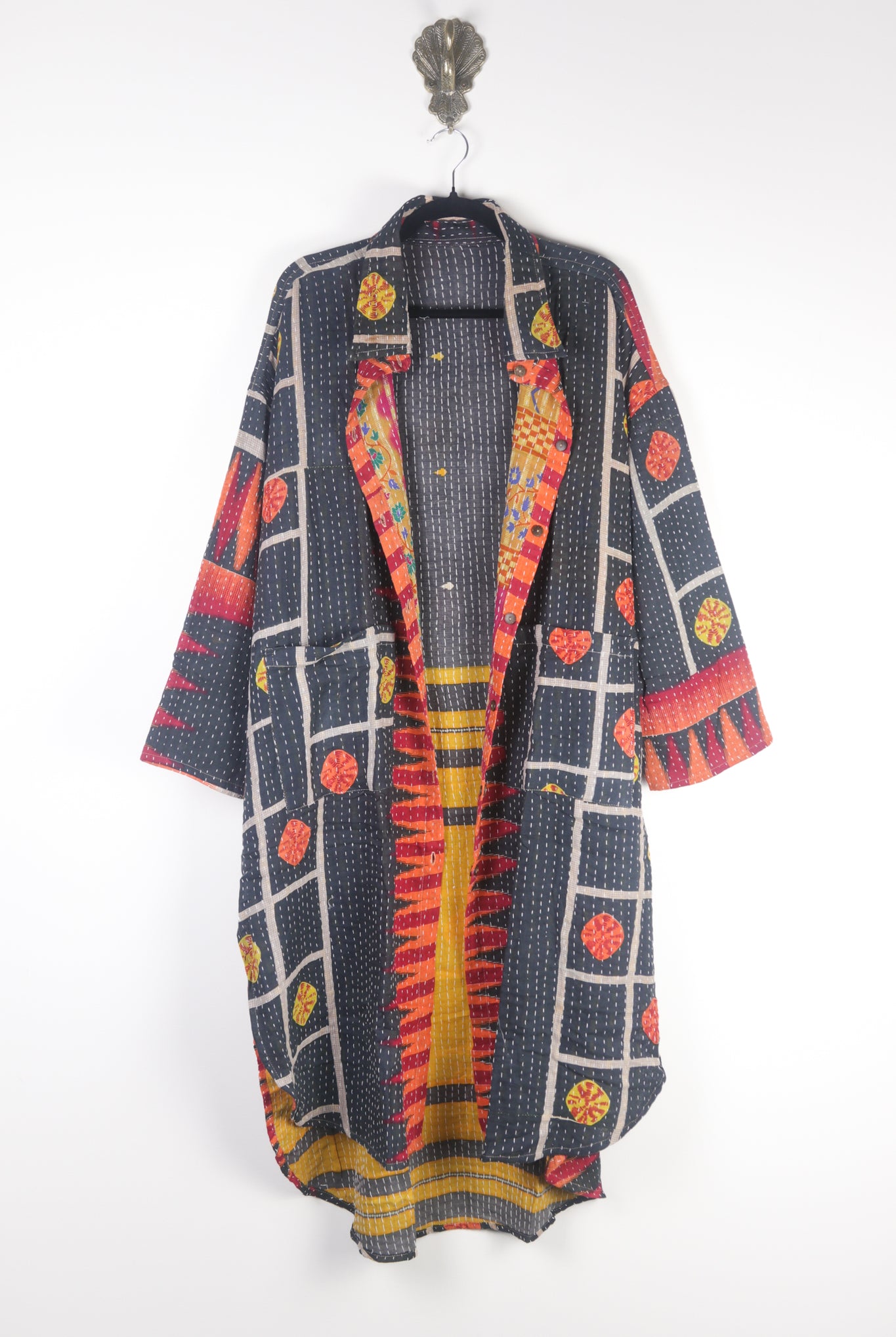
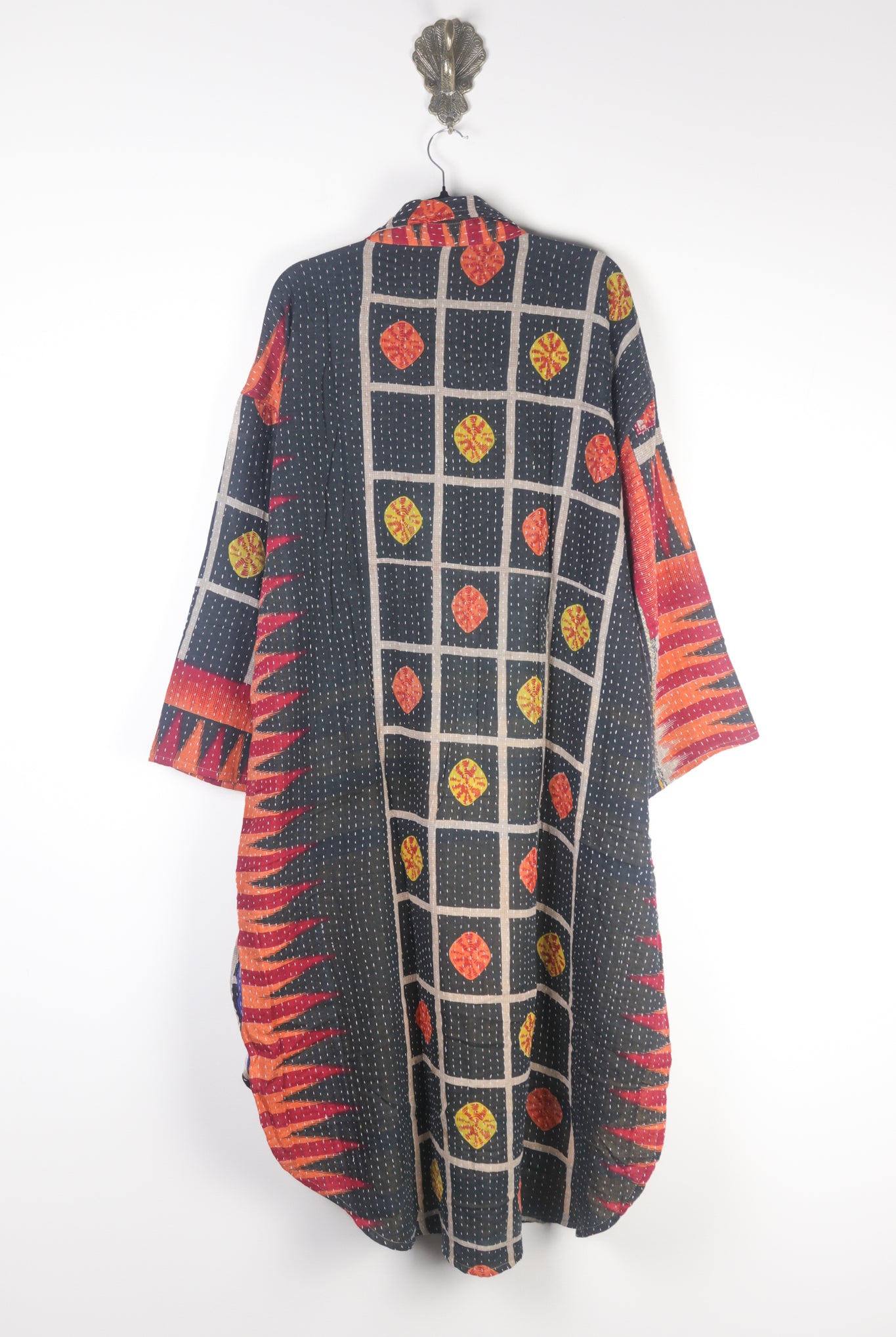
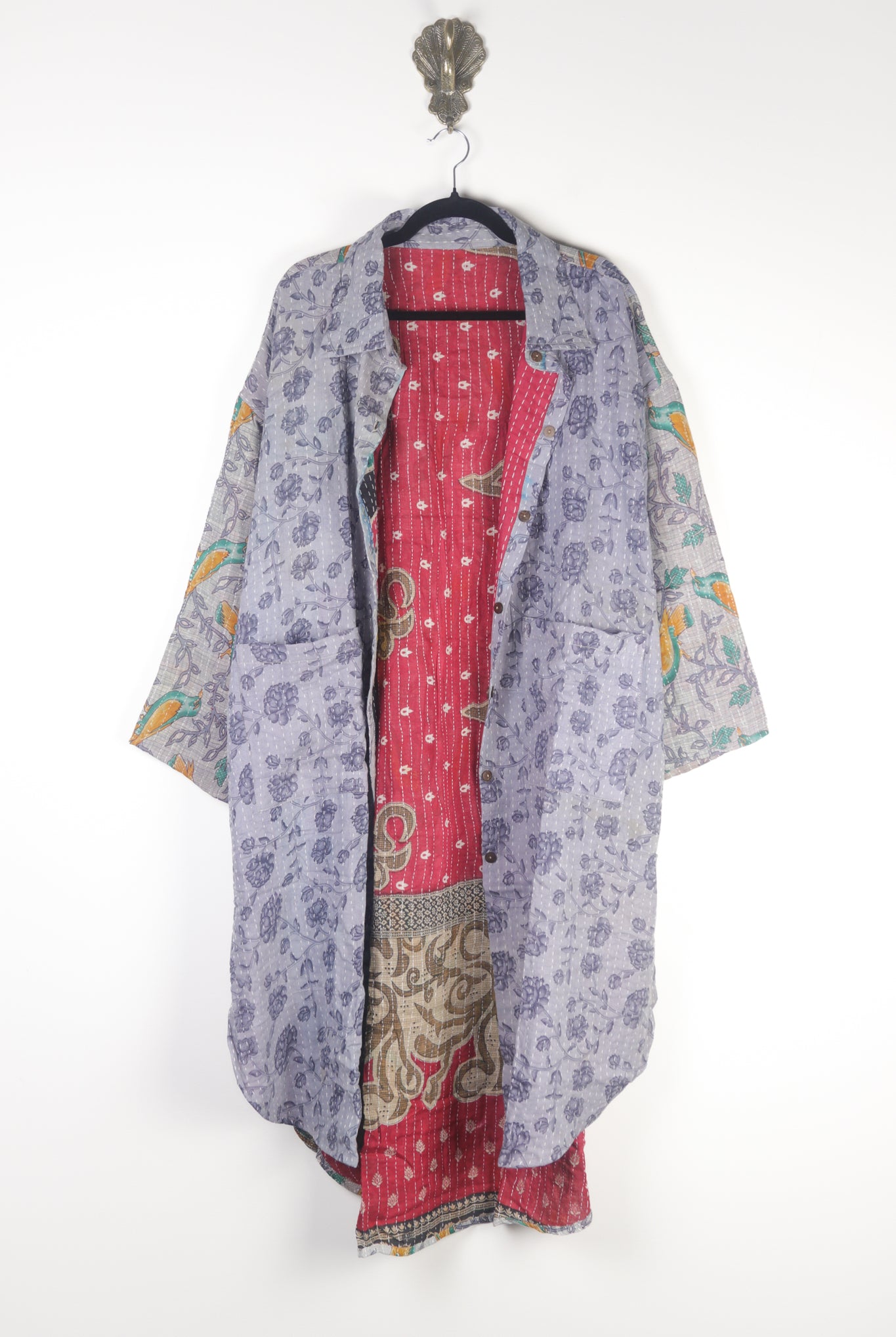
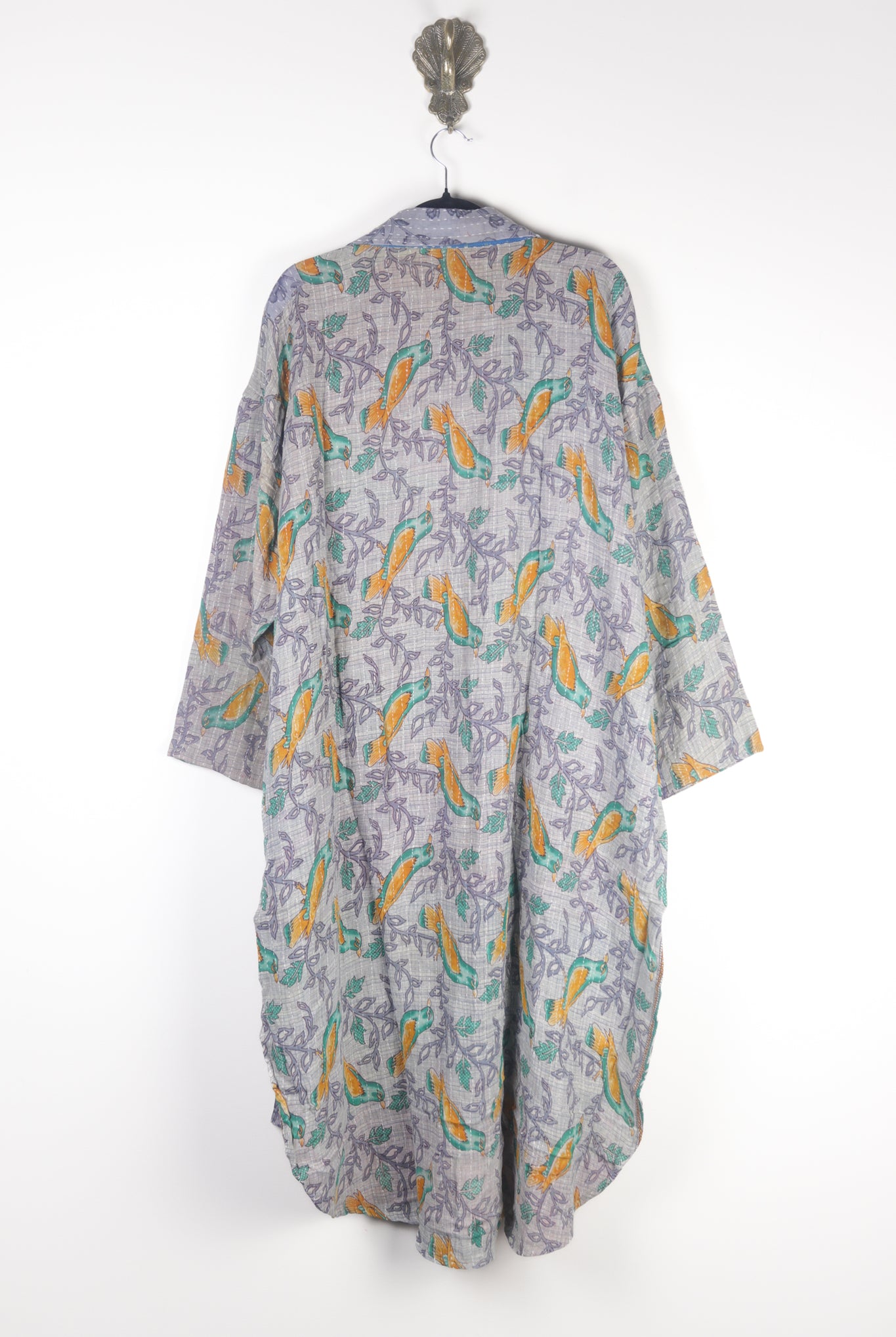
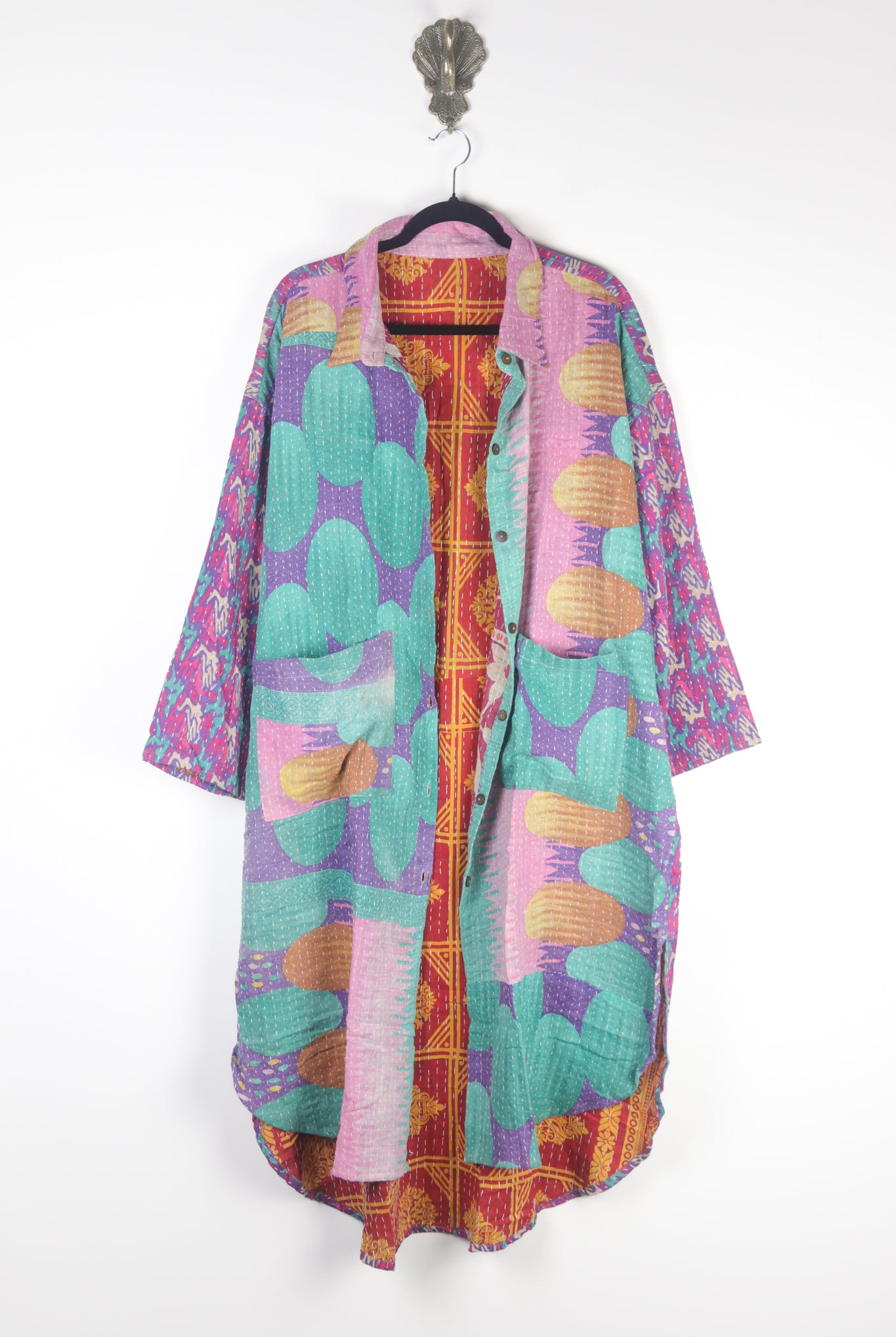
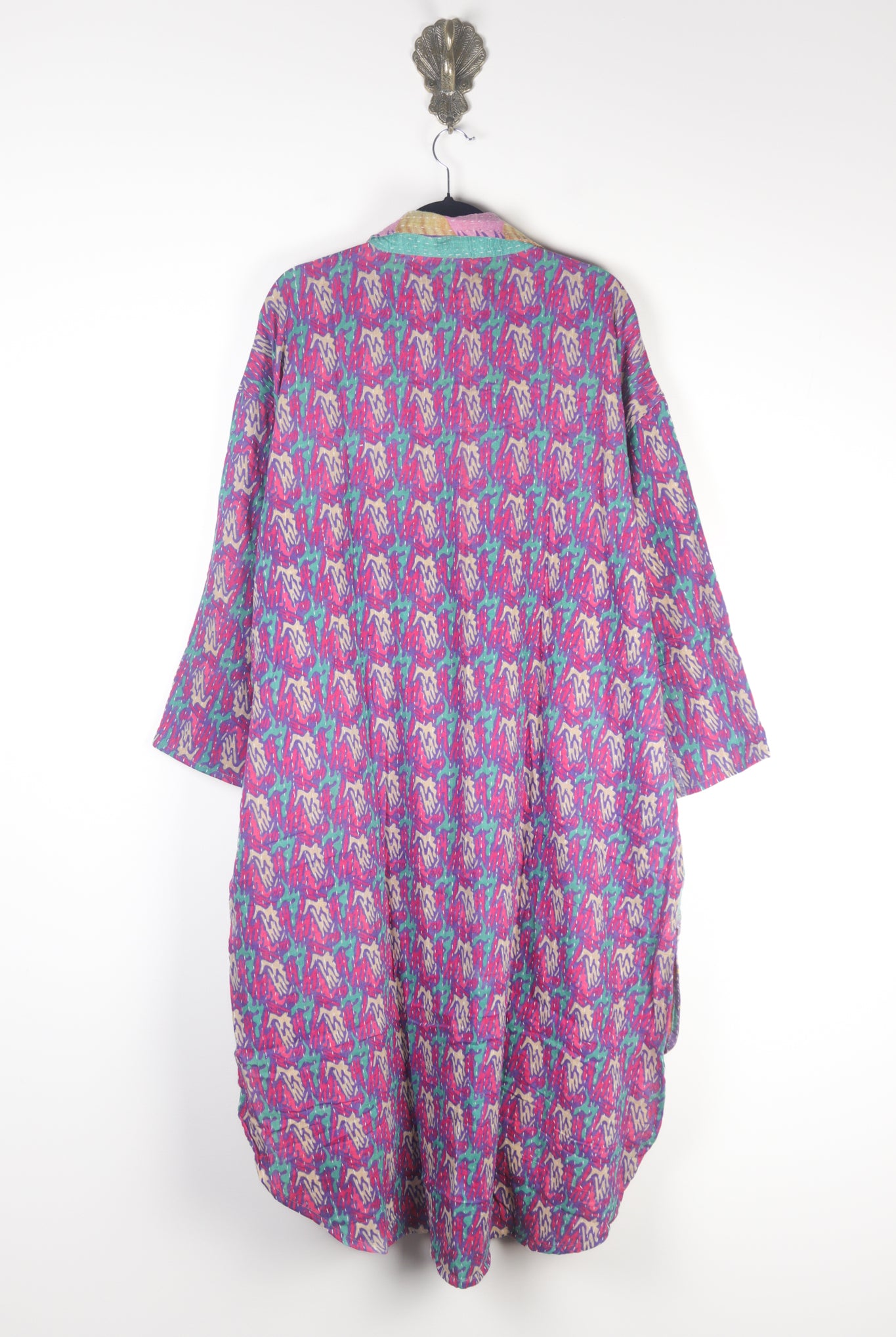
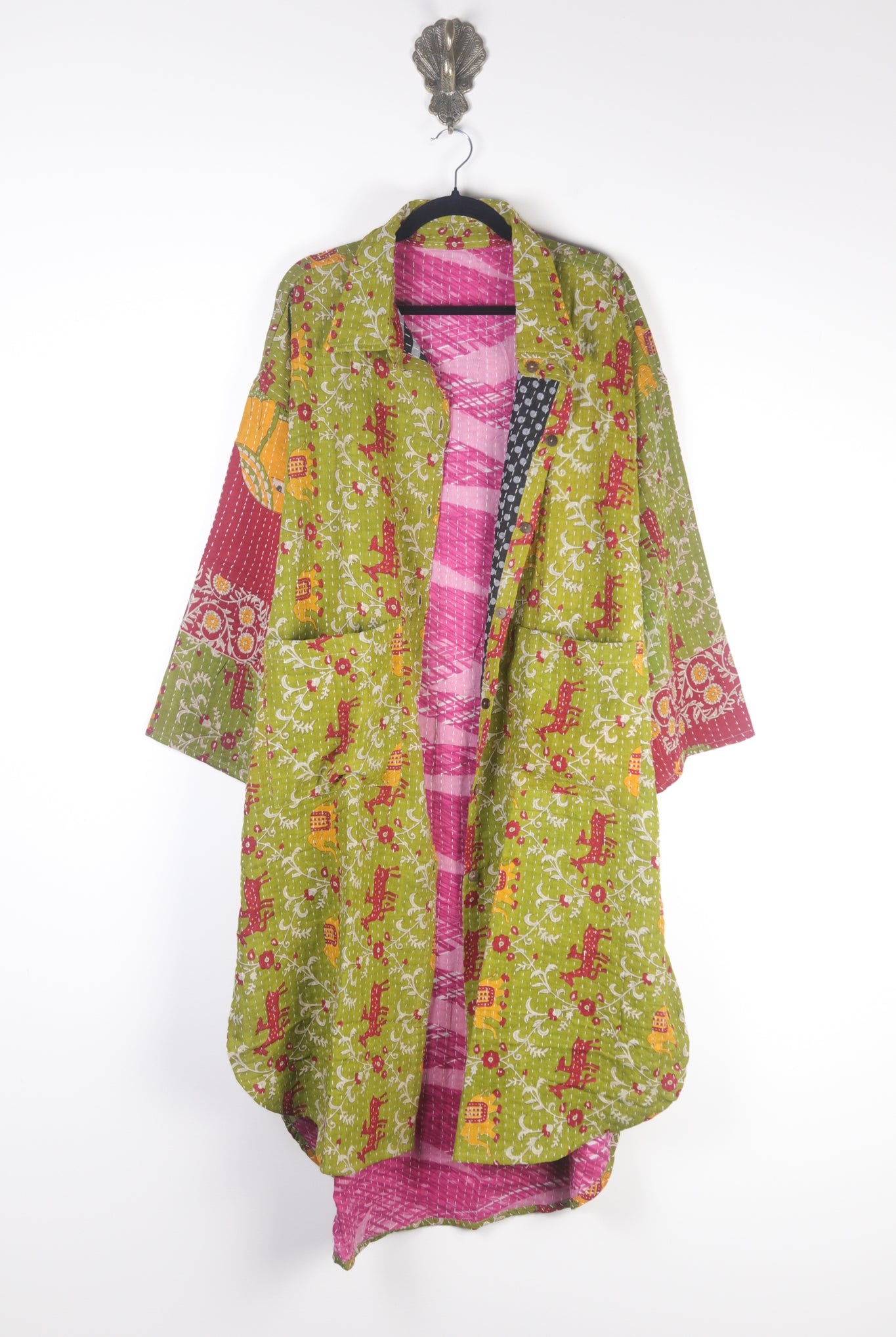
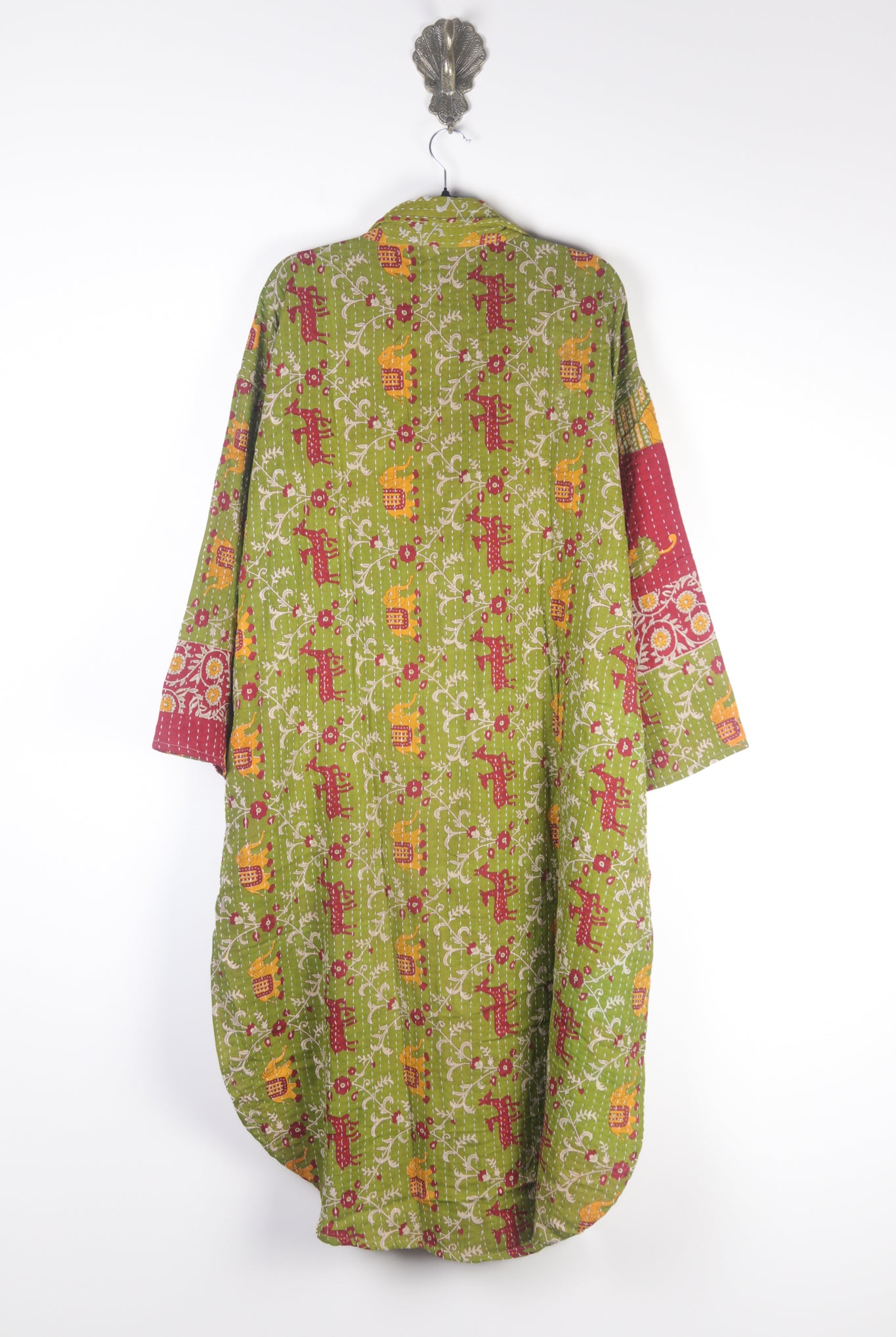
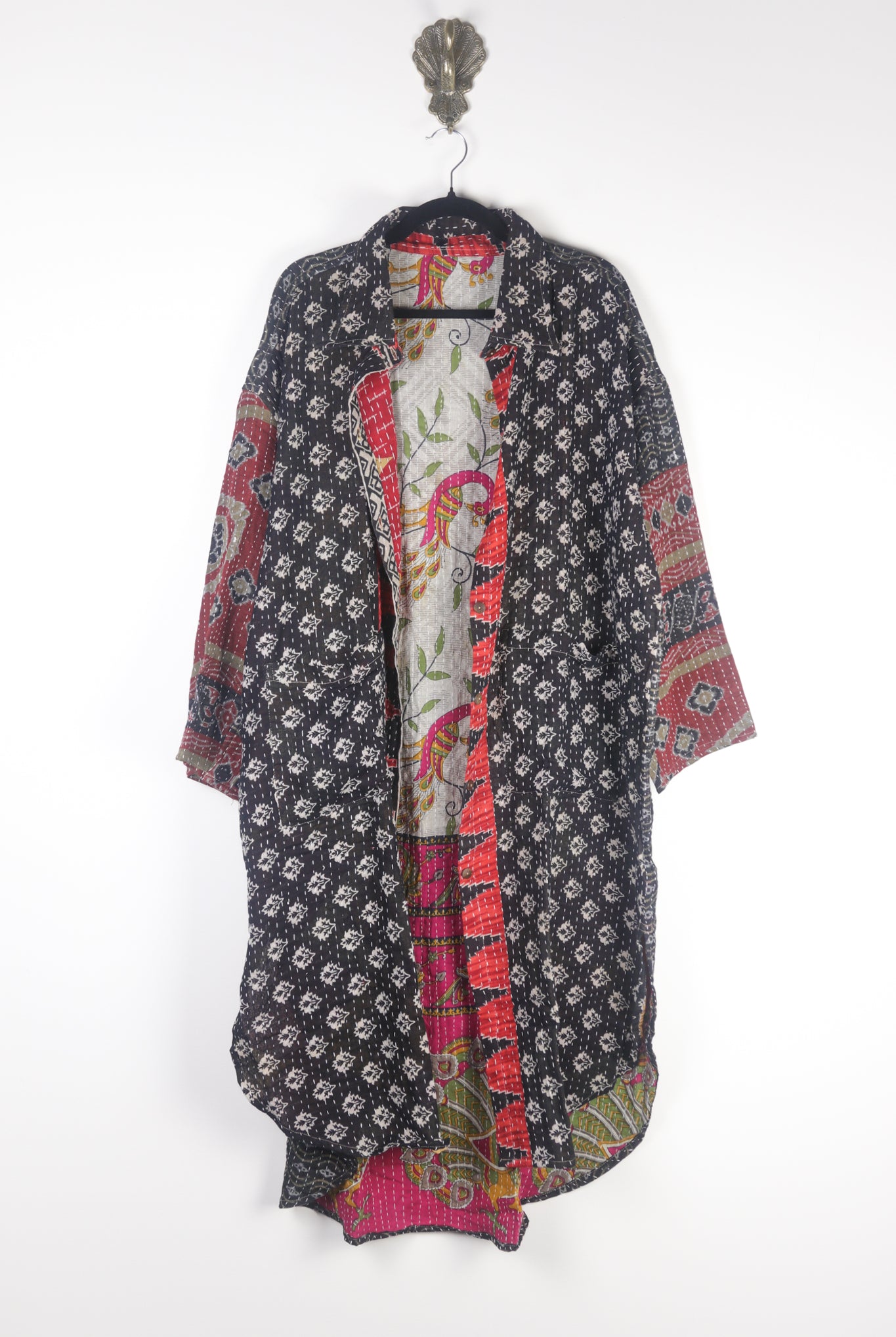
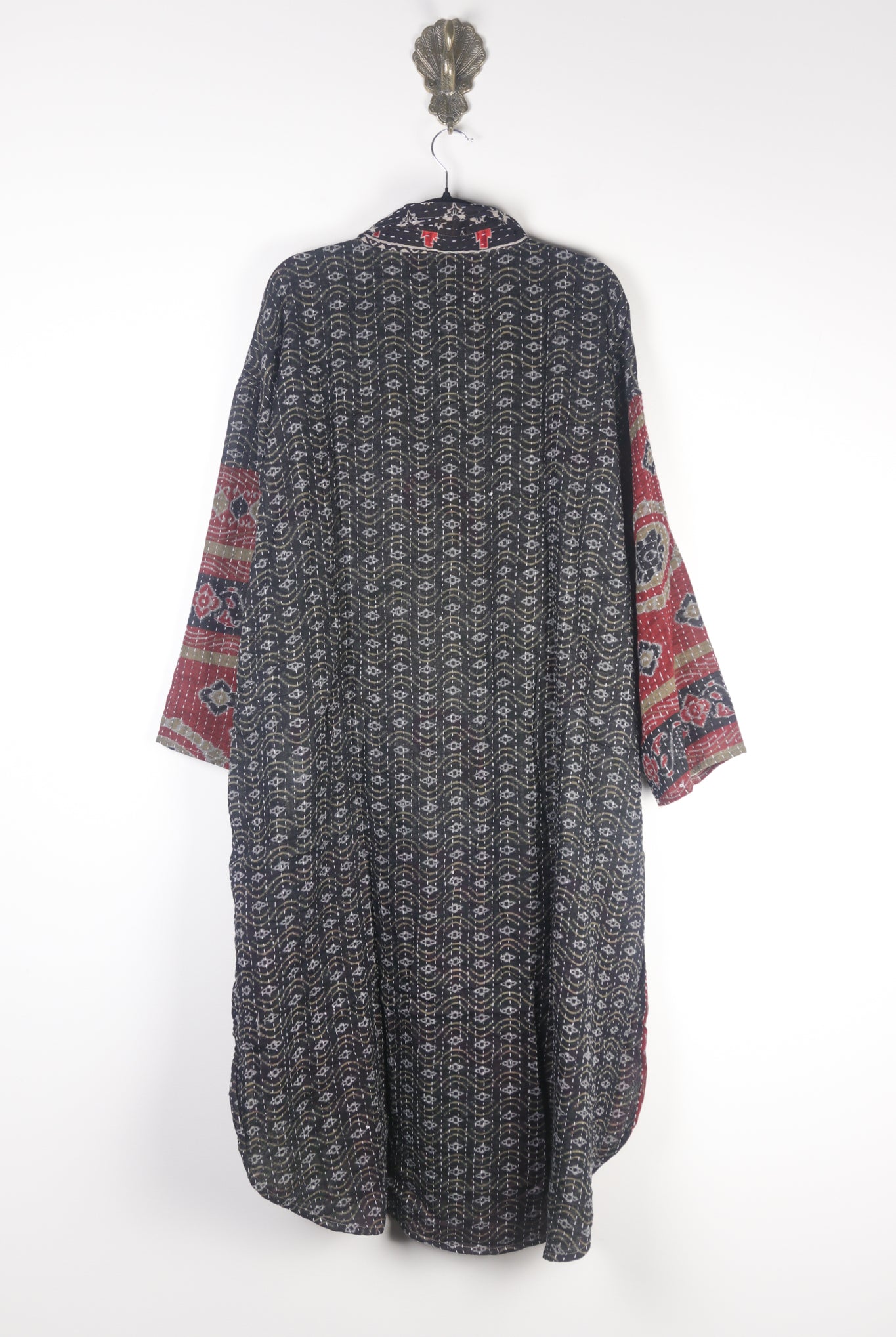
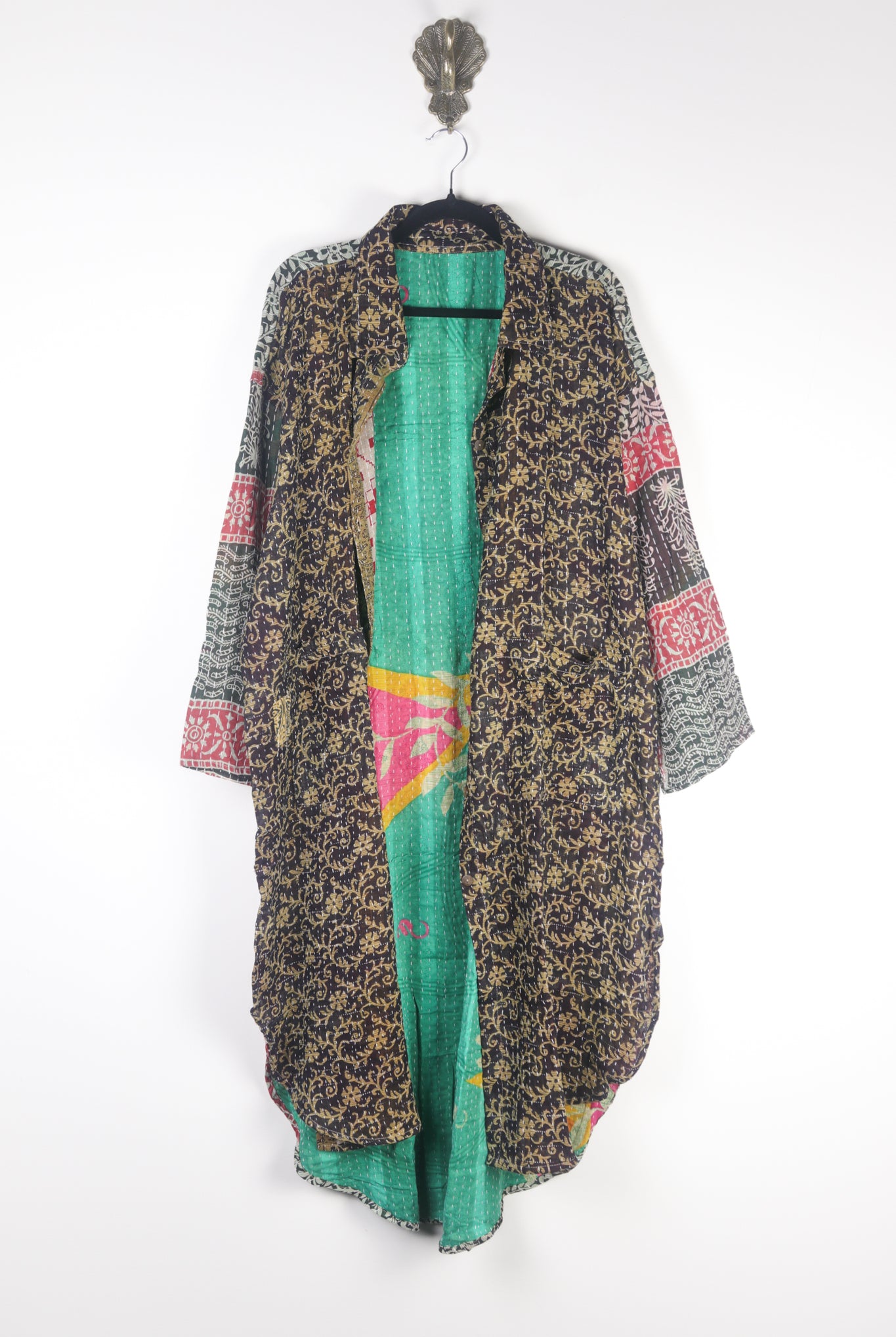
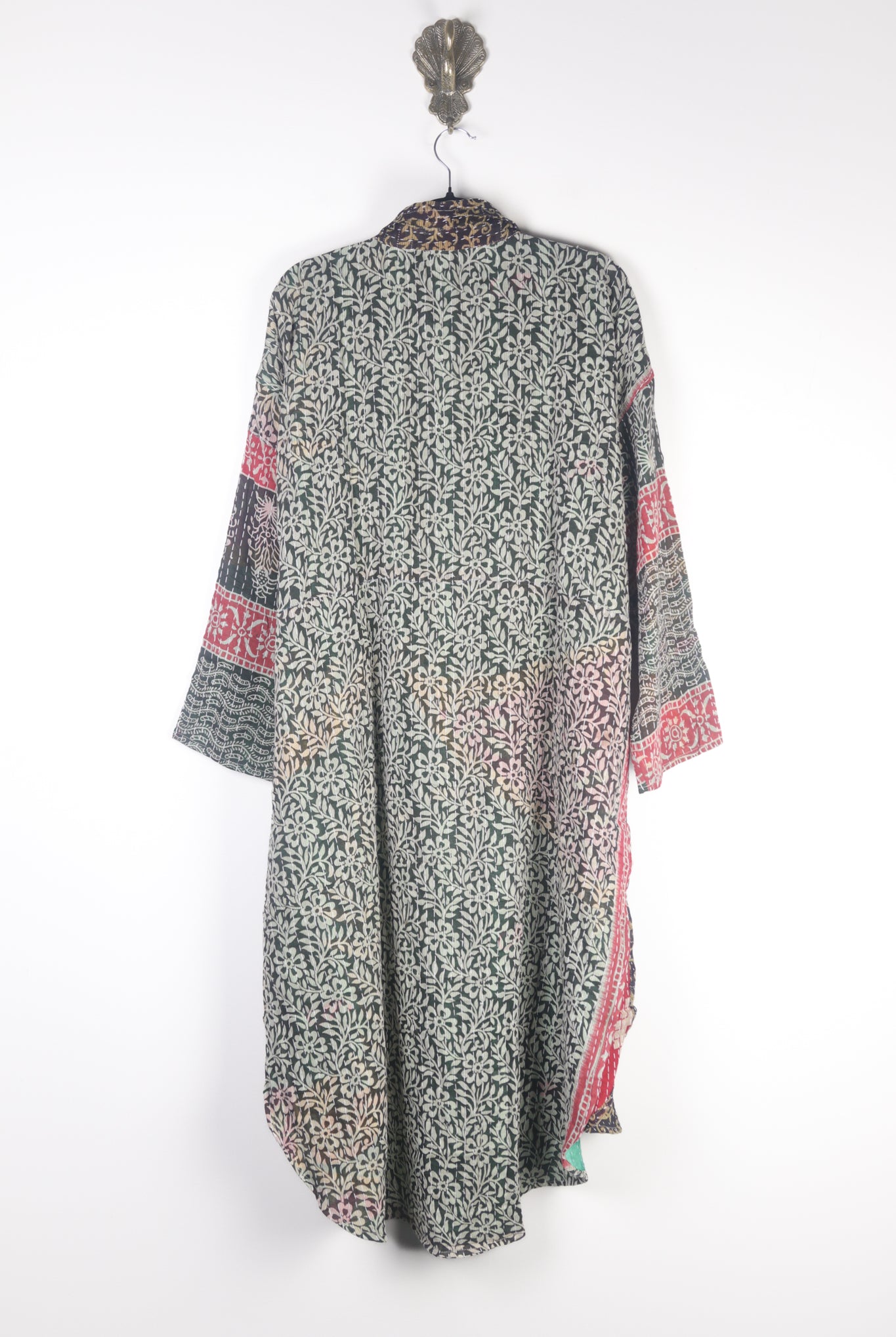
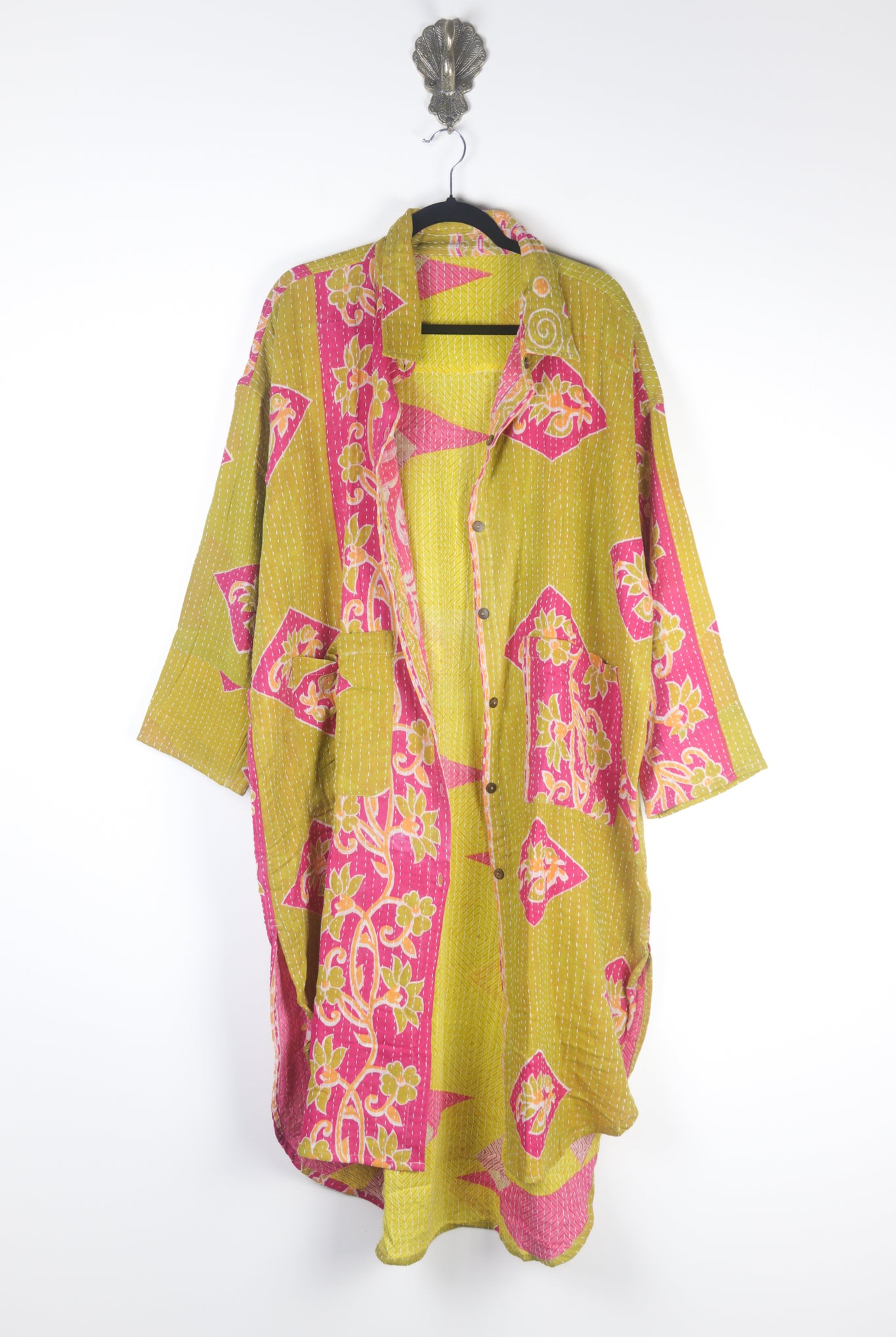
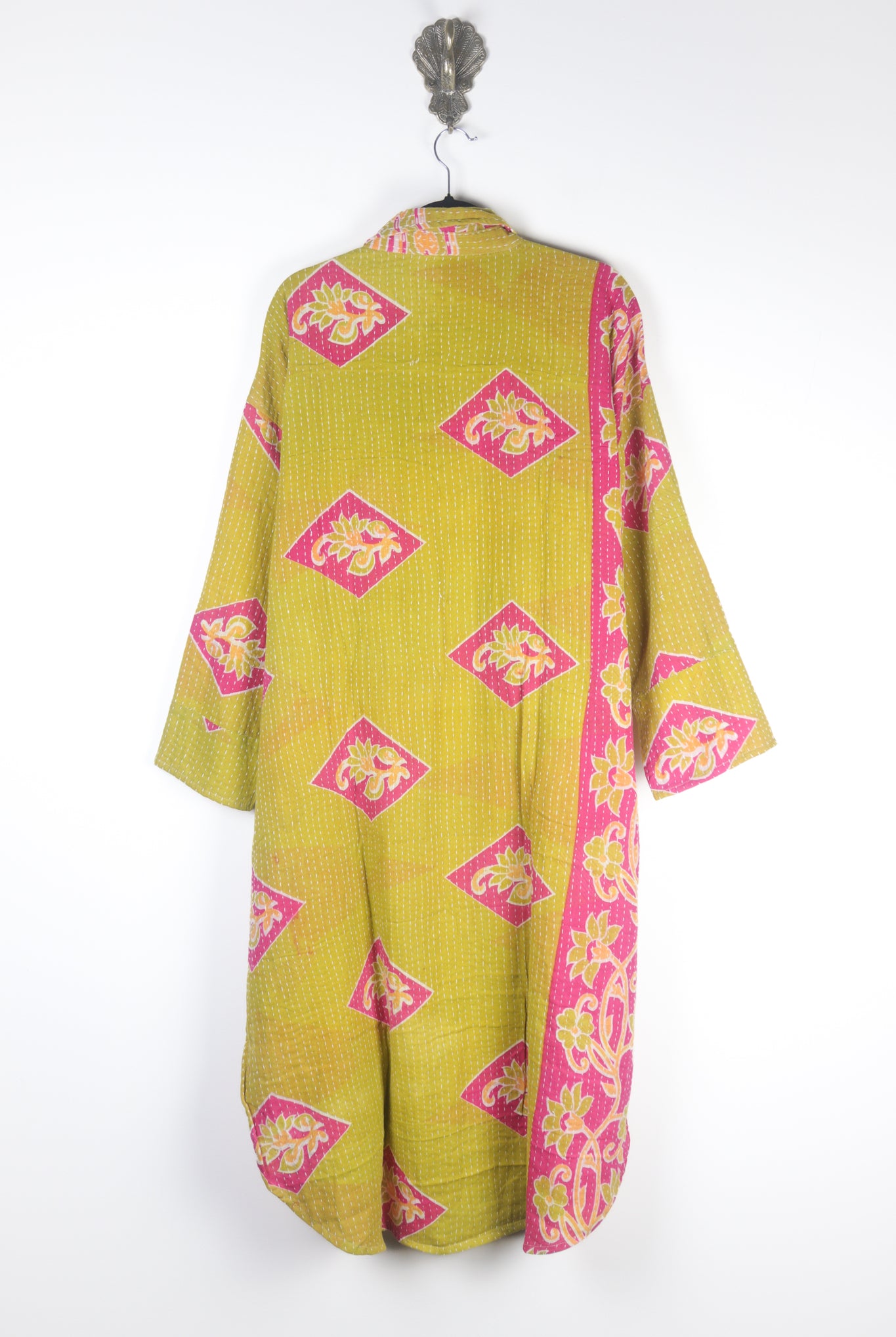
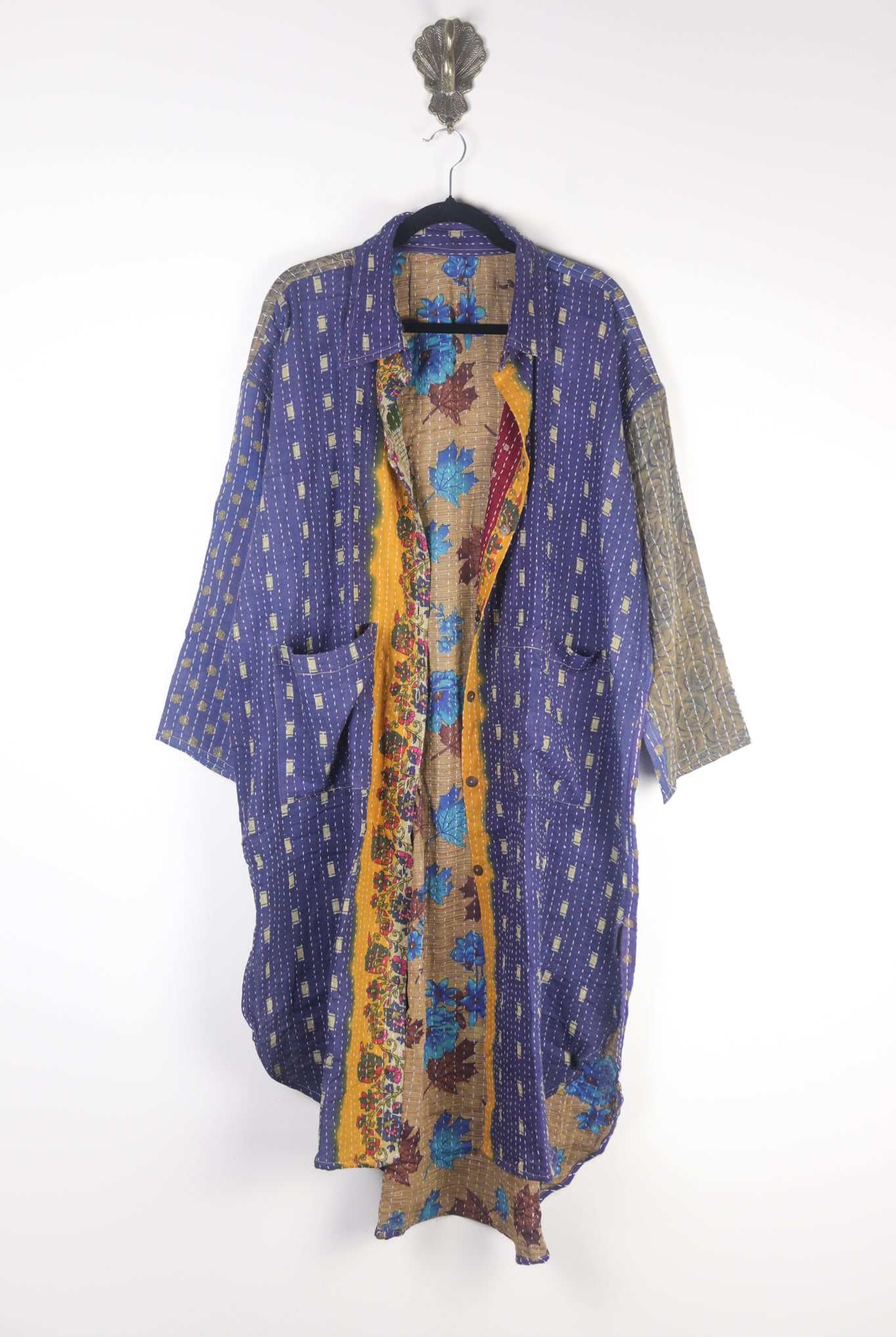
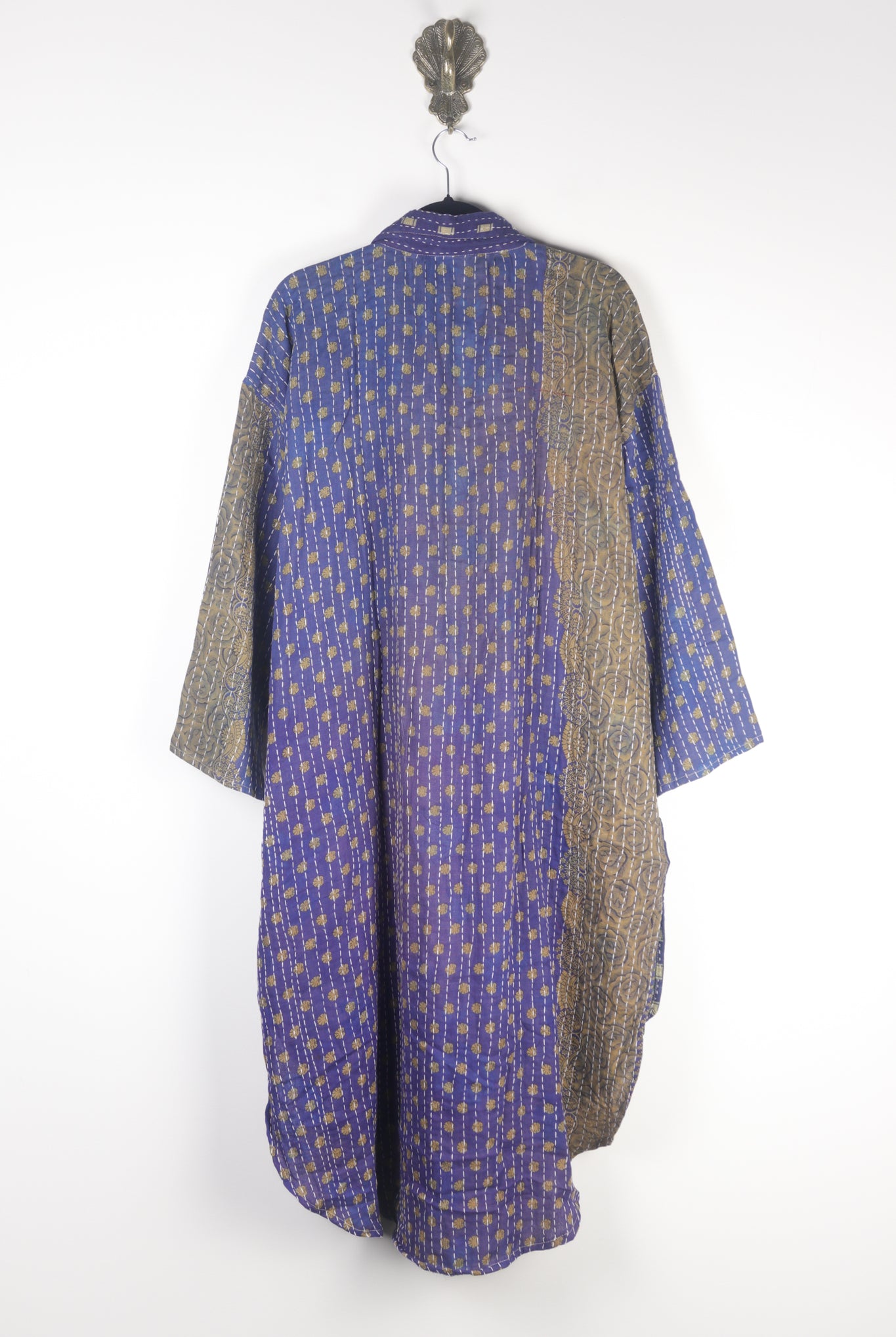
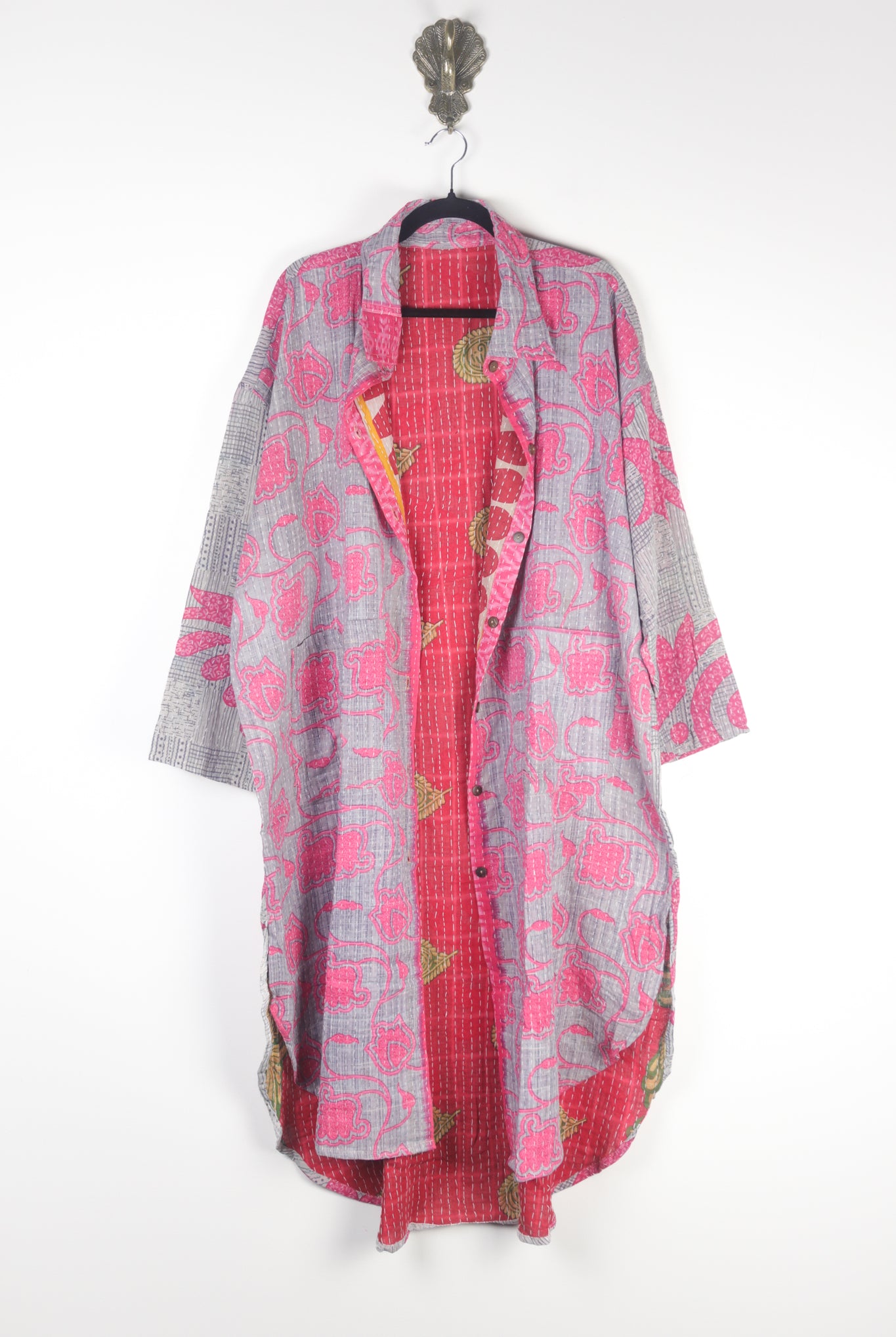
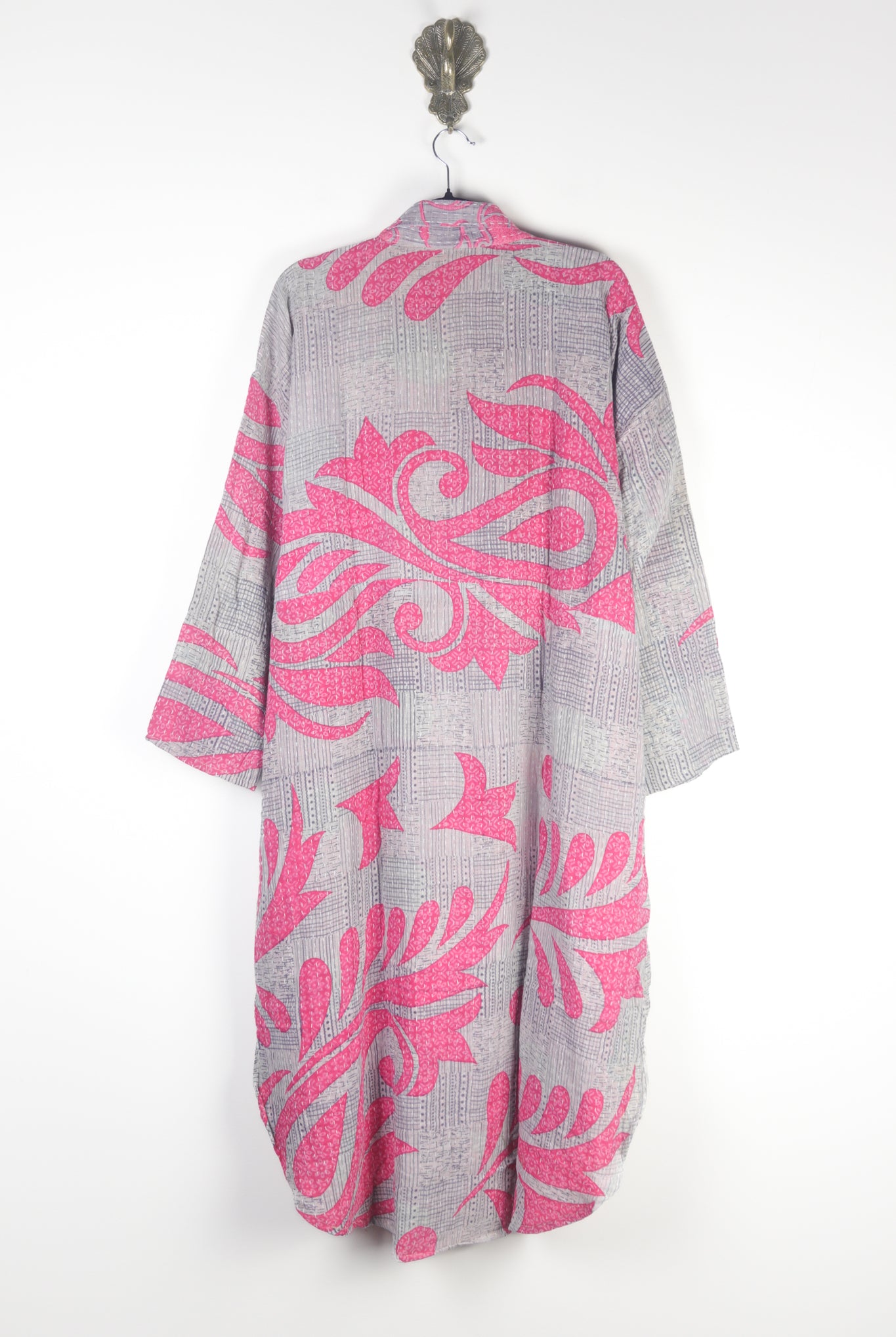
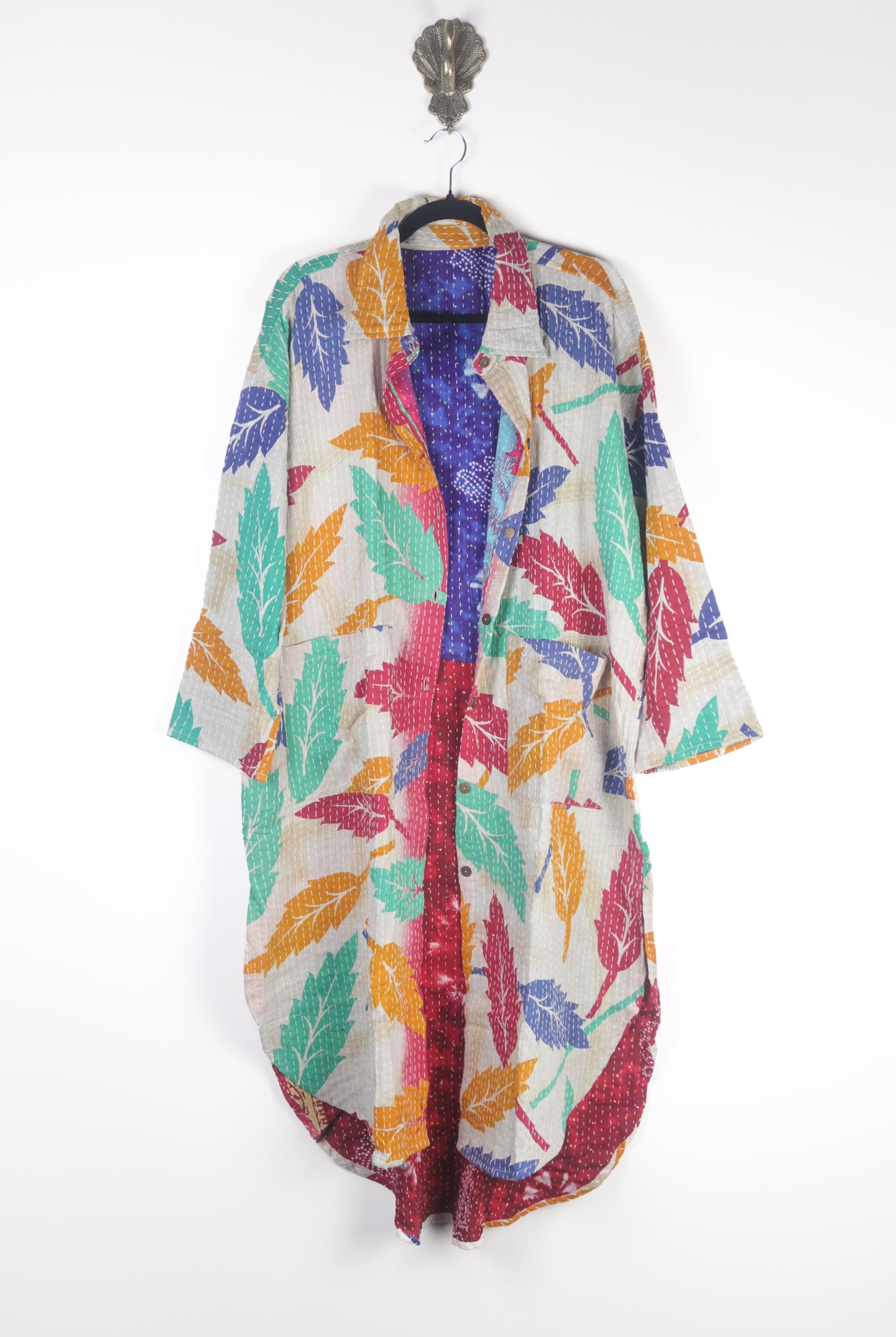
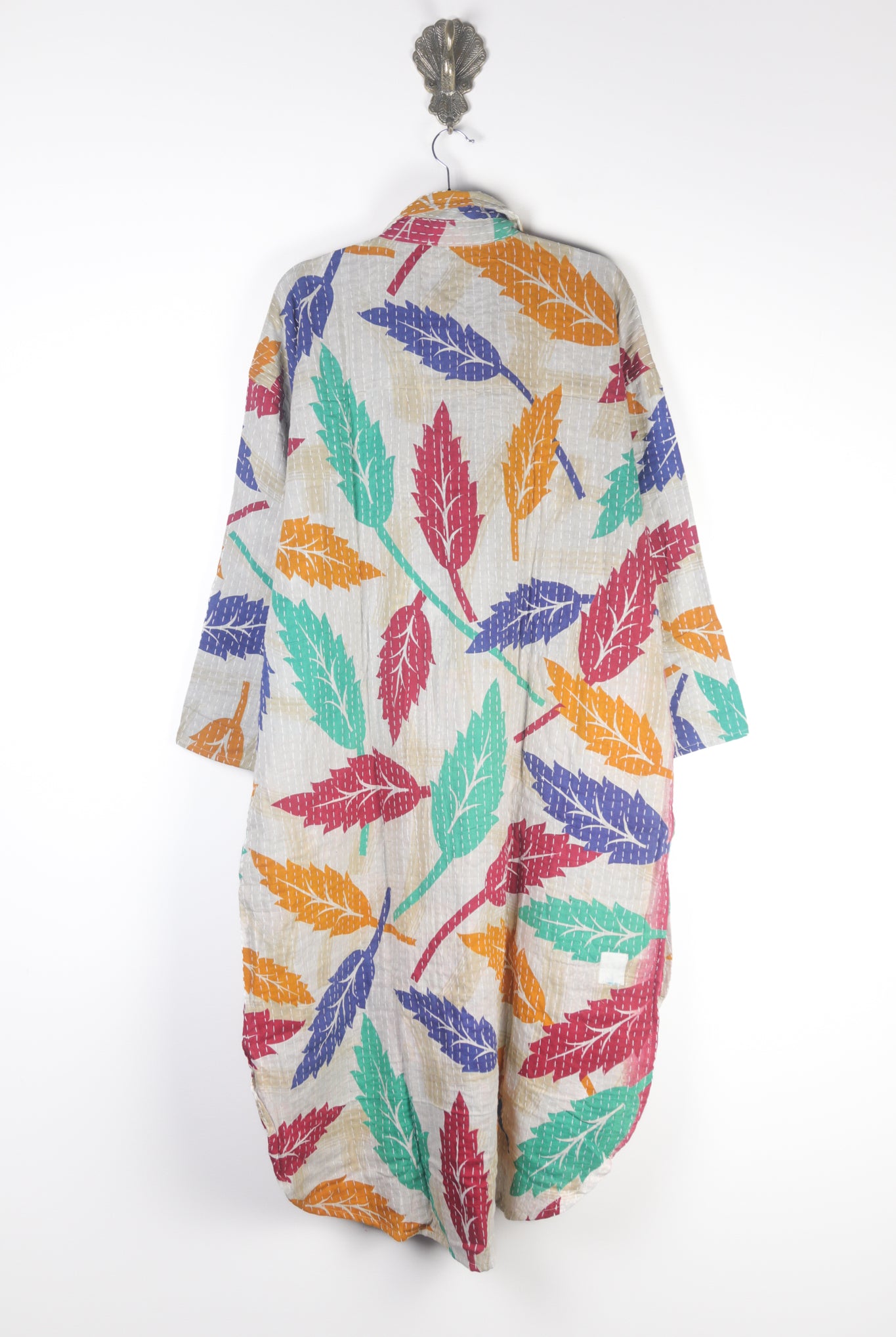
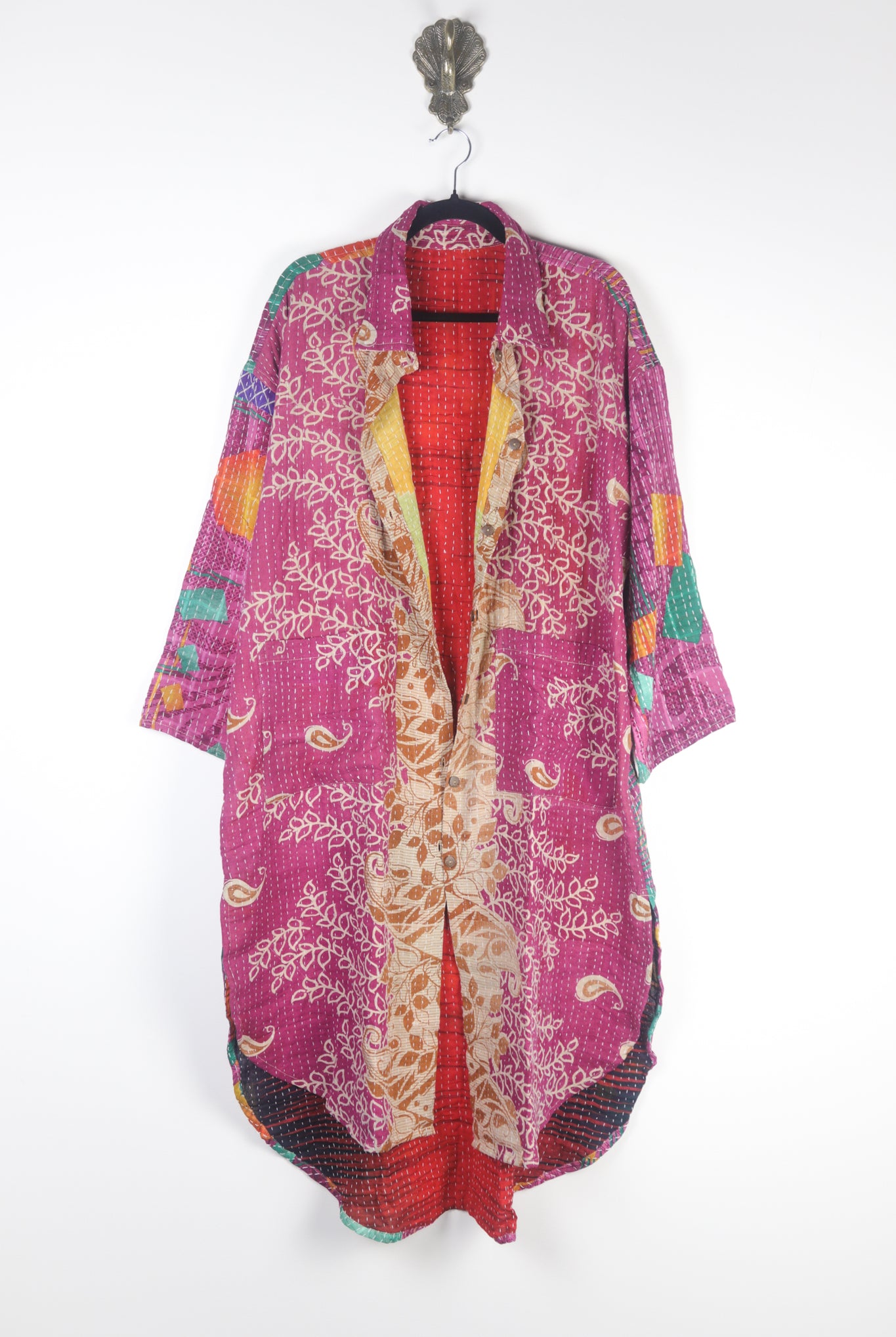
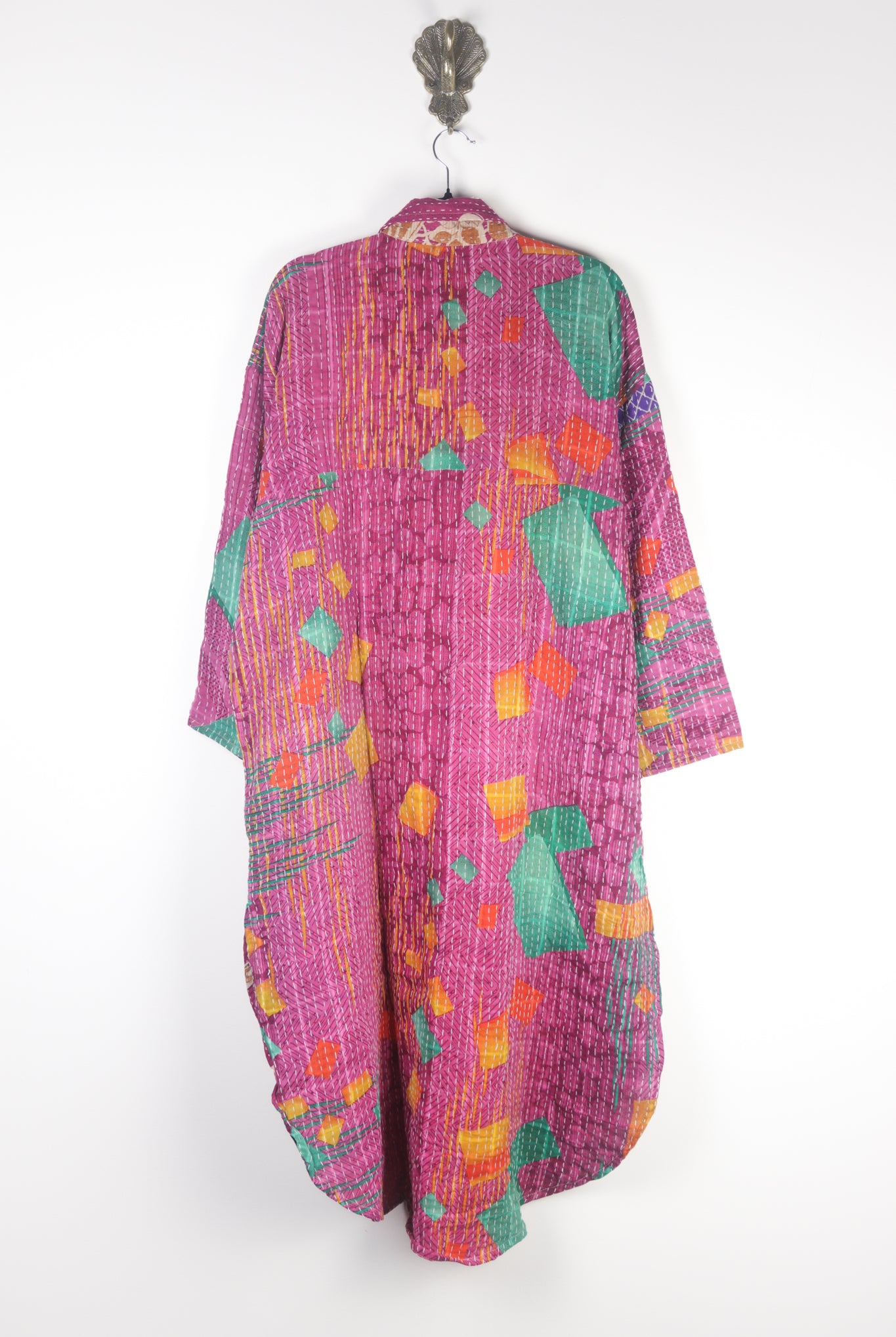
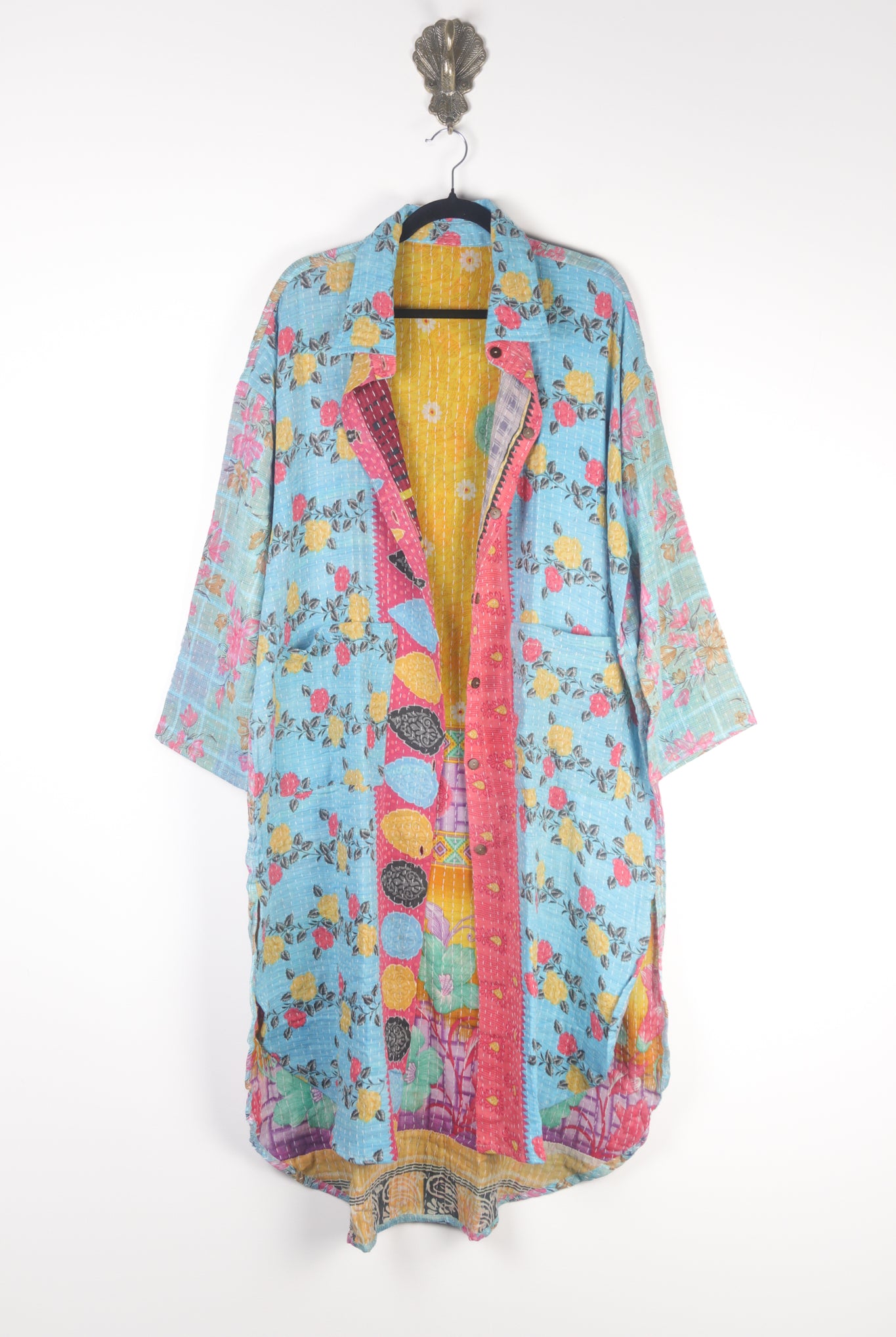
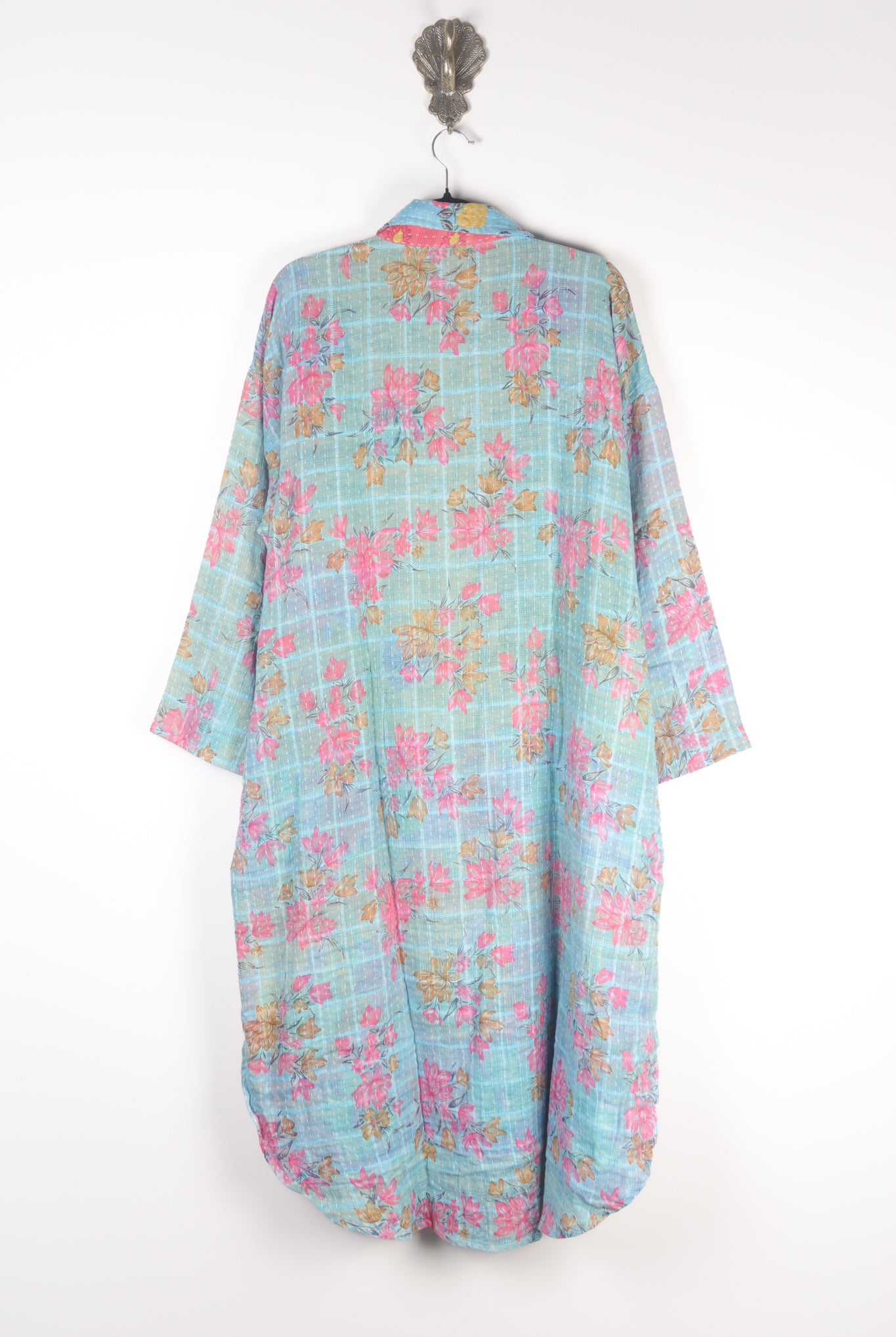
Kantha has long been considered a sustainable textile, but like many things in fashion, the answer isn’t always so simple. Not all kantha is created the same, and understanding where it comes from and how it’s made makes all the difference.
Traditionally, kantha began as a practice of repurposing. In regions of India and Bangladesh, women would layer together old cotton saris and dhotis, stitching them by hand to create blankets and quilts for the home. Nothing was wasted. Every piece of fabric was given a second life, carrying stories, memories and meaning through each stitch. At its core, kantha is rooted in frugality, care and a deep respect for materials.

At Renew Bohemian, this is the foundation we build from. All of the fabrics we use for our kantha pieces are made from recycled saris. By working with textiles that already exist, we avoid the need for new fabric production and the water, energy and chemical processes that come with it. Instead, we’re extending the life of materials that might otherwise be discarded.
This also plays a role in reducing textile waste. In the past year alone, our community helped prevent over 13,000 pounds of sari fabric from ending up in landfill across our kantha and recycled silk ranges. It’s a small step in the bigger picture, but one that reflects the kind of circular approach we believe in.
Kantha is also inherently low-impact in the way it’s constructed. Our pieces are made from 100% cotton and, because the fabrics are reclaimed, they don’t require additional dyeing. The beauty of kantha lies in what already exists, the layers, the softness, the variations and the quirks that make each piece unique.

We’re always looking for ways take our sustainability journey further. One of our partner workshops operates exclusively using solar power (as does Kantha HQ here in Australia), helping to reduce reliance on conventional energy sources. The process of creating kantha itself is minimal in resource use, relying more on time, skill and handwork than machinery or intensive production methods.
We make a conscious effort to minimise waste at every stage. Offcuts from production are repurposed into pockets, waistbands and drawstrings, scarves & scrunchies, and the infamous kantha 'scrap' ties that we use to wrap your orders. We love seeing these ties take on a life of their own once they reach you, from crafts to pet dress-ups to headbands, nothing goes to waste if it can be used again.


Beyond the environmental impact, kantha supports real people and preserves traditional craft. The stitching techniques have been passed down through generations, often from mother to daughter, carrying not just skill but cultural knowledge. For many women, this work provides a source of income, independence and community, while keeping a meaningful textile tradition alive.
There’s also something deeper woven into kantha. Historically, the motifs stitched into these pieces, instruments, animals, symbols from nature, reflect a connection to traditions and the natural world and a respect for balance and interdependence. The act of stitching itself is slow and intentional, offering a quiet contrast to the speed of modern fashion.
So, is kantha sustainable?
It can be, when it stays true to its roots. When it uses reclaimed materials, avoids unnecessary processing, and supports the people who make it, kantha becomes a beautiful example of circular, low-impact design.
Like all fashion, it depends on how it’s made. But when done thoughtfully, kantha represents a way forward, one that values reuse over waste, people over profit, and stories over mass production.

Here at Renew Bohemian, we take a slow-fashion approach, with a commitment to a more sustainable, circular textile industry woven through everything we do. We’re continually reviewing and refining our processes, setting meaningful goals to better support both people and planet. Our hope is that we create pieces you love to wear, while contributing to a more thoughtful and responsible future for fashion.
To stay in the loop with our sustainability goals and learn more about our partners in India, be sure to subscribe to our newsletter. Check out our Instagram and join our joyful and supportive Facebook community group for behind-the-scenes peeks, giveaways and style inspiration!